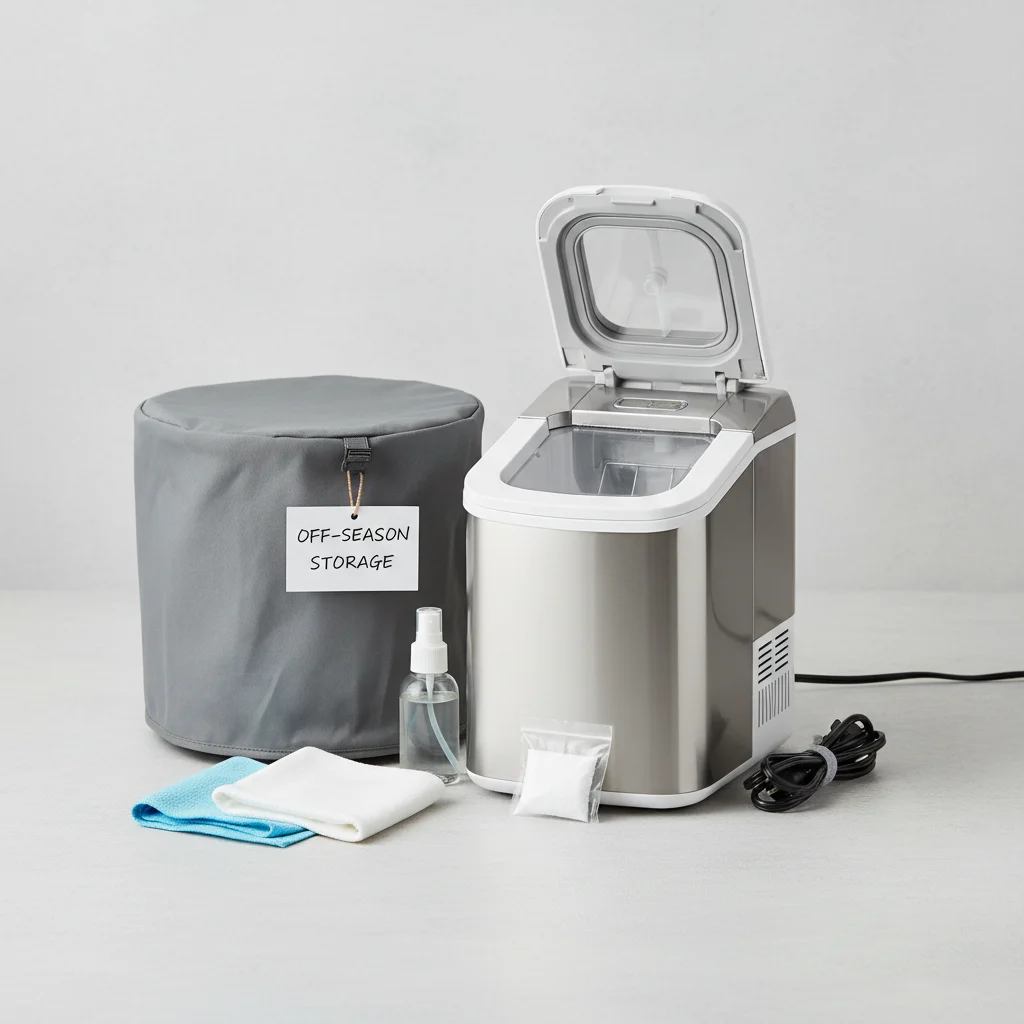
Proper portable ice maker storage is crucial for extending its lifespan and ensuring it’s ready for use when you need it. There are 5 key tips to follow when storing your appliance, especially during the off-season, to prevent mold, mildew, and mechanical issues.
Thorough Cleaning Before Storage
Before putting your portable ice maker away, a deep clean is essential. Empty all water from the reservoir and drain lines. Use a solution of equal parts white vinegar and water to run a cleaning cycle, which helps descale and sanitize the interior. After the cycle, rinse thoroughly with clean water multiple times. Finally, wipe down all interior and exterior surfaces with a clean, dry cloth. Ensure the unit is completely dry before proceeding to prevent mold and mildew growth during storage.
Ensure Complete Drying and Air Circulation
After cleaning, it’s critical to allow the ice maker to air dry completely. Leave the lid or door open for at least 24-48 hours in a well-ventilated area. You can even place a small fan nearby to aid in the drying process. Any residual moisture can lead to unpleasant odors, mold, or even damage to internal components over time. Once dry, you can place a desiccant packet inside the unit to absorb any lingering humidity, though this is optional.
Protect from Dust and Pests
|
Our Picks for the Best Ice Maker in 2026
As an Amazon Associate I earn from qualifying purchases.
|
||
| Num | Product | Action |
|---|---|---|
| 1 | EUHOMY Countertop Ice Maker Machine with Handle, 26lbs in 24Hrs, 9 Ice Cubes Ready in 6 Mins, Auto-Cleaning Portable Ice Maker with Basket and Scoop, for Home/Kitchen/Camping/RV. (Black) |

|
| 2 | Typhur Fast Nugget Ice Maker Countertop with Self-Cleaning Pump, 35lbs/24H Crushed Pebble Ice Machine with Pellet Ice, 8 Packs Cleaner, Dual Ice Scoops for Home, Kitchen, Party, RV, Stainless Steel |
|
| 3 | Efficient Countertop Ice Maker |
|
| 4 | ETL Approval Clear Ice Cube Maker Countertop, 3 Crystal 1.6" Clear Ice Cube in 10-20Mins, Slow-Melting & Adjustable Ice Thickness, Ice Makers Countertop with Self-Cleaning for Kitchens/Home/Office |
|
| 5 | Silonn Nugget Ice Maker Countertop, Pebble Ice Maker with Soft Chewable Ice, One-Click Operation Ice Machine with Self-Cleaning, 33lbs/24H for Home,Kitchen,Office |
|
| 6 | FRIGIDAIRE Touchscreen Nugget Ice Maker, Countertop Ice Machine, Sonic Ice Maker with 33 lbs. Capacity, Slate |
|
| 7 | Nugget Ice Maker Countertop, Silonn Chewable Pellet Ice Machine with Self-Cleanin Function, 33lbs/24H Portable Ice Makers for Home Kitchen Officce, Black |
|
| 8 | Frigidaire 26 Lbs per Day Portable Compact Maker, Ice Making Machine, Stainless, Medium |
|
| 9 | Frigidaire Countertop Crunchy Chewable Nugget Ice Maker, Compact, 33lbs per Day, Metallic Finish |
|
| 10 | Silonn Ice Maker Countertop, Portable Ice Machine with Carry Handle, Self-Cleaning Ice Makers with Basket and Scoop, 9 Cubes in 6 Mins, 26 lbs per Day, Ideal for Home, Kitchen, Camping, RV |
|
Once clean and dry, protect your portable ice maker from dust and pests. Cover the unit with a breathable cloth cover or place it back in its original packaging if you still have it. Avoid using airtight plastic bags, as these can trap moisture and encourage mold growth. If storing in an area prone to pests, consider placing the covered ice maker inside a sturdy plastic bin with a tight-fitting lid. This physical barrier helps prevent insects or rodents from nesting inside the appliance.
- Clean and dry thoroughly before storage.
- Store in a cool, dry, and dark location.
- Protect from dust, pests, and extreme temperatures.
- Keep the lid slightly ajar for air circulation.
- Perform a quick clean before next use.
Choose the Right Storage Location
The ideal storage location for your portable ice maker is a cool, dry, and dark place. Avoid areas with extreme temperature fluctuations, such as uninsulated garages or attics, as these can damage internal components and seals. Basements can be suitable if they are dry and well-ventilated; otherwise, a closet or pantry inside your home is often best. Storing it away from direct sunlight also helps prevent plastic components from degrading or discoloring over time.
Prepare for Future Use
Even after careful storage, it’s a good practice to perform a quick check and clean before using your portable ice maker again. Remove any covers or packaging. Fill the reservoir with clean water and run a short cycle, discarding the first batch of ice. This flushes out any dust or stale water that might have accumulated. Inspect the power cord and any visible components for signs of wear or damage. Following these steps ensures your ice maker is hygienic and ready to produce fresh ice when the warmer months return.
Get our weekly buyer guide
Practical specs, not advice. Unsubscribe anytime.
