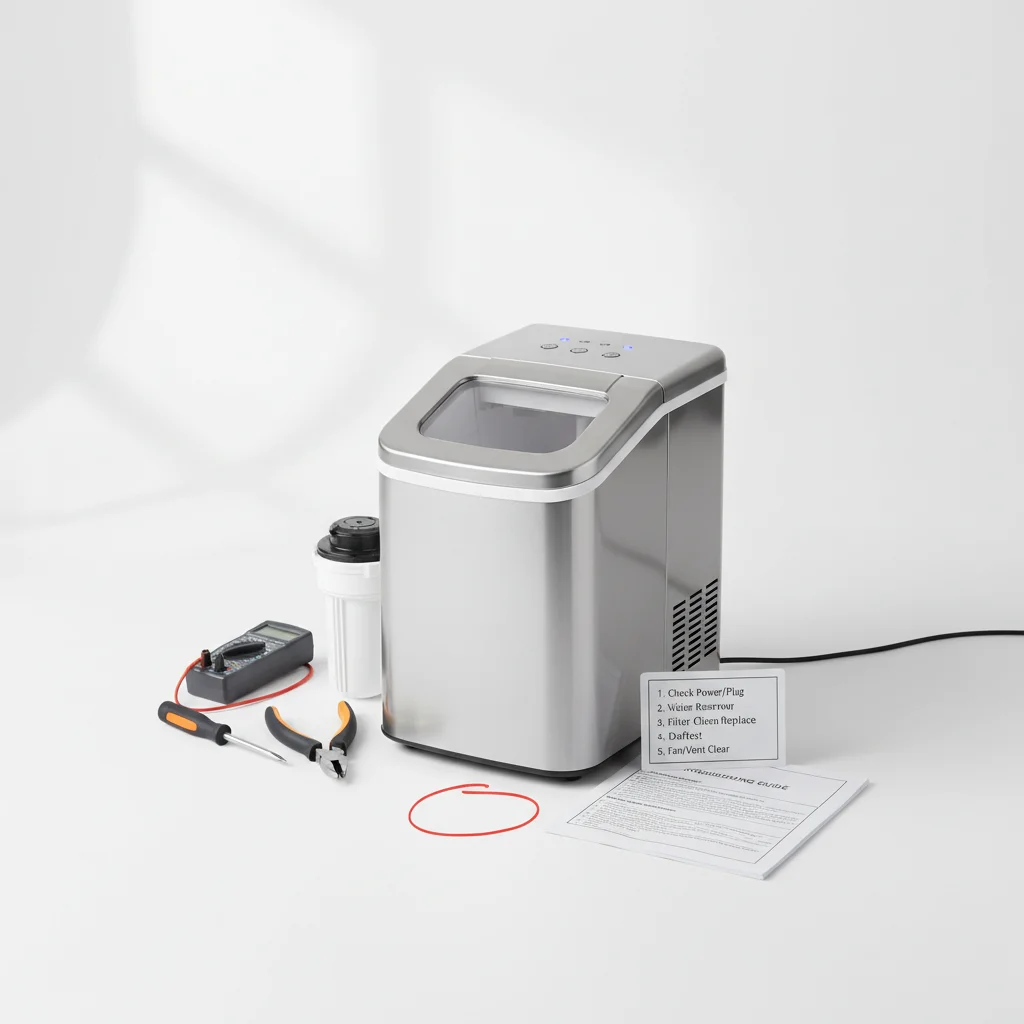
If your portable ice maker has stopped producing ice, the issue often stems from a few common culprits, including low water levels, a clogged water line, or a malfunctioning sensor. Addressing these problems typically involves simple steps that can restore your machine’s functionality without professional help, such as checking water levels, inspecting for clogs, and ensuring proper ventilation.
Checking Water Levels and Pump Function
The most frequent reason a portable ice maker fails to make ice is insufficient water in the reservoir. Ensure the water level is above the minimum fill line. If the reservoir is full, listen for the sound of the water pump. A humming sound indicates the pump is attempting to draw water. If there’s no sound, or if the pump sounds strained, it might be clogged or faulty. Try cleaning the water intake filter, which can sometimes become blocked by mineral deposits or debris.
Inspecting for Clogs in Water Lines
Over time, hard water can lead to mineral buildup in the internal water lines, restricting flow to the ice tray. To check for clogs, first unplug the unit. Carefully inspect any visible tubing for kinks or blockages. For internal clogs, a descaling solution (often a mix of vinegar and water) can be run through the system. Follow your specific model’s instructions for descaling, as improper methods can damage components. This process helps dissolve mineral deposits that impede water circulation.
Sensor Malfunctions and Overheating
|
Our Picks for the Best Ice Maker in 2026
As an Amazon Associate I earn from qualifying purchases.
|
||
| Num | Product | Action |
|---|---|---|
| 1 | Typhur Fast Nugget Ice Maker Countertop with Self-Cleaning Pump, 35lbs/24H Crushed Pebble Ice Machine with Pellet Ice, 8 Packs Cleaner, Dual Ice Scoops for Home, Kitchen, Party, RV, Stainless Steel |

|
| 2 | Frigidaire 26 Lbs per Day Portable Compact Maker, Ice Making Machine, Stainless, Medium |
|
| 3 | Silonn Nugget Ice Maker Countertop, Pebble Ice Maker with Soft Chewable Ice, One-Click Operation Ice Machine with Self-Cleaning, 33lbs/24H for Home,Kitchen,Office |
|
| 4 | Silonn Ice Maker Countertop, Portable Ice Machine with Carry Handle, Self-Cleaning Ice Makers with Basket and Scoop, 9 Cubes in 6 Mins, 26 lbs per Day, Ideal for Home, Kitchen, Camping, RV |
|
| 5 | Efficient Countertop Ice Maker |
|
| 6 | ETL Approval Clear Ice Cube Maker Countertop, 3 Crystal 1.6" Clear Ice Cube in 10-20Mins, Slow-Melting & Adjustable Ice Thickness, Ice Makers Countertop with Self-Cleaning for Kitchens/Home/Office |
|
| 7 | FRIGIDAIRE Touchscreen Nugget Ice Maker, Countertop Ice Machine, Sonic Ice Maker with 33 lbs. Capacity, Slate |
|
| 8 | Nugget Ice Maker Countertop, Silonn Chewable Pellet Ice Machine with Self-Cleanin Function, 33lbs/24H Portable Ice Makers for Home Kitchen Officce, Black |
|
| 9 | Frigidaire Countertop Crunchy Chewable Nugget Ice Maker, Compact, 33lbs per Day, Metallic Finish |
|
| 10 | EUHOMY Countertop Ice Maker Machine with Handle, 26lbs in 24Hrs, 9 Ice Cubes Ready in 6 Mins, Auto-Cleaning Portable Ice Maker with Basket and Scoop, for Home/Kitchen/Camping/RV. (Black) |
|
Portable ice makers use sensors to detect water levels, ice fullness, and internal temperature. A faulty sensor can incorrectly signal that the ice basket is full or that there’s no water, preventing the machine from starting the ice-making cycle. While sensor replacement is usually a job for a technician, you can try resetting the unit by unplugging it for 15-30 minutes. Additionally, ensure the ice maker is placed in a well-ventilated area, as overheating can cause it to shut down as a safety measure. The ideal ambient temperature for most portable ice makers is between 50-90 degrees Fahrenheit.
Understanding the Refrigeration Cycle
The core of ice production relies on a functioning refrigeration cycle, involving a compressor, condenser, and evaporator. If your ice maker is running but not getting cold, there might be an issue with the refrigerant or the compressor. This is a more complex problem that typically requires professional diagnosis and repair. However, before assuming a major fault, confirm that the fan is operating correctly and that there’s no excessive dust buildup on the condenser coils, which can hinder heat dissipation and reduce cooling efficiency.
Common Troubleshooting Steps to Try
- Ensure the unit is plugged into a dedicated outlet and receiving power.
- Check the water reservoir for adequate water levels.
- Clean the water intake filter and descaling the unit.
- Reset the ice maker by unplugging it for 30 minutes.
- Verify the ambient temperature is within the recommended range.
By systematically checking these areas, you can often identify and resolve the problem with your portable ice maker. Many issues are minor and can be fixed with basic maintenance or adjustments.If the problem persists after trying these steps, consulting the manufacturer’s manual or contacting customer support for your specific model is the next best course of action. They can provide model-specific advice or arrange for repairs if necessary.
Frequently Asked Questions
Why is my portable ice maker not making ice?
Your portable ice maker may not be making ice due to low water levels, a clogged water line, a malfunctioning sensor, or issues with the refrigeration cycle. Most problems can be resolved by checking water levels, cleaning components, or resetting the unit.
How do I check the water level in my portable ice maker?
To check the water level, ensure the reservoir is filled above the minimum fill line. If the reservoir is full, listen for the water pump; a humming sound indicates it's attempting to draw water. Insufficient water is a common cause of ice production failure.
What causes clogs in portable ice maker water lines?
Clogs in portable ice maker water lines are typically caused by mineral buildup from hard water over time. These deposits restrict water flow to the ice tray. Descaling the unit with a vinegar and water solution can help dissolve these blockages.
Can overheating affect a portable ice maker's performance?
Yes, overheating can cause a portable ice maker to shut down as a safety measure, preventing it from making ice. Ensure the unit is placed in a well-ventilated area, as the ideal ambient temperature for most models is between 50-90 degrees Fahrenheit.
When should I call a professional for ice maker repair?
You should call a professional for ice maker repair if the unit is running but not getting cold, which may indicate an issue with the refrigerant or compressor. Complex problems like these typically require professional diagnosis and specialized tools.
Troubleshoot Your Portable Ice Maker
Follow these steps to diagnose and fix common issues preventing your portable ice maker from producing ice.
Ensure the water reservoir is filled above the minimum line. Listen for the water pump; a strained or absent sound may indicate a clog. Clean the water intake filter if it appears blocked by debris.
Unplug the unit and visually inspect visible tubing for kinks. For internal clogs, run a descaling solution, such as a vinegar and water mix, through the system to dissolve mineral deposits. Refer to your model's manual for specific descaling instructions.
Unplug the ice maker for 15-30 minutes to reset any faulty sensors. Ensure the machine is in a well-ventilated area, as overheating can cause it to shut down. The ambient temperature should ideally be between 50-90 degrees Fahrenheit.
If the unit runs but doesn't get cold, check that the fan is operating and condenser coils are free of dust. Issues with refrigerant or the compressor usually require professional repair. This step helps rule out simpler causes before seeking expert help.
Get our weekly buyer guide
Practical specs, not advice. Unsubscribe anytime.

This was super helpful for figuring out why my machine wasn’t producing ice. I checked the water levels like it suggested, and while that wasn’t the issue, it led me to realize the water line itself was a bit kinked. Straightened it out and boom, ice production is back to normal. Good tips here.
My ice maker has been acting up, and I was hoping for a quick fix. I tried checking the water levels and listening for the pump, but everything seemed fine there. It’s still not making ice consistently, so I guess my issue might be more complex than the common culprits mentioned. Still, it was worth a try.
Fantastic advice! My portable ice maker suddenly stopped making ice, and I was worried it was a goner. Turns out, I just needed to ensure proper ventilation. I moved it away from the wall, and now it’s working like new. Simple fix that I totally overlooked. Highly recommend these troubleshooting steps.
I was so frustrated when my portable ice maker stopped working, but this guide saved me! I thought it was completely broken, but it turned out the water intake filter was just really clogged with mineral deposits. After a quick clean, it’s making ice perfectly again. So glad I didn’t have to buy a new one!