Choosing the best heavy-duty commercial ice maker for a small cafe involves balancing robust performance with limited space and varying demand. Undercounter ice makers, like those from Hoshizaki or Manitowoc, are ideal for small cafes, producing 50-200 pounds of ice daily and fitting under standard countertops. Modular units, offering 150-400+ pounds per day, suit higher demands and provide greater flexibility with separate ice-making heads and storage bins.
Common Types of Commercial Ice Makers for Cafes
Selecting the appropriate ice maker begins with understanding the different configurations available and how they align with a cafe’s specific needs. Commercial ice makers are typically categorized by their design and the type of ice they produce, each offering distinct advantages for various applications.
Undercounter Ice Makers
Undercounter ice makers are a popular choice for small cafes due to their integrated design, combining the ice-making unit and storage bin into a single, compact machine. These units are specifically engineered to fit beneath standard countertops, making them ideal for businesses with limited floor space or those needing convenient, localized ice access in service areas. They typically produce between 50 and 200 pounds of ice per day, with storage capacities ranging from 25 to 90 pounds, making them suitable for moderate daily demand. Many brands, including compact models from Hoshizaki and Manitowoc, as well as units from EdgeStar, Empura, and Atosa, offer reliable undercounter solutions built with durability in mind.
Modular Ice Makers
For cafes with higher ice demand, anticipated growth, or more diverse ice requirements, modular ice makers present a flexible solution. Unlike undercounter units, modular machines separate the ice-making head from the storage bin, allowing for greater customization in capacity and footprint. The ice-making head sits atop a standalone ice bin, which can be sized independently to meet specific storage needs. These systems are capable of producing 150 to over 400 pounds of ice per day, providing substantial output for busy periods. Brands like Hoshizaki, Manitowoc, and Scotsman are renowned for their modular offerings, known for their heavy-duty construction and consistent performance. While they require more space than undercounter models, their scalability makes them a strong consideration for cafes that prioritize high volume and long-term flexibility.
Ice Types for Cafes
The type of ice a machine produces significantly impacts beverage quality, presentation, and even customer preference. Cafes primarily rely on a few key ice shapes to perfect their offerings.
-
Cube Ice (Full & Half-Cube): Cube ice is the classic choice for a wide array of beverages. Its slow-melting properties ensure drinks remain chilled longer without excessive dilution, making it ideal for everything from soft drinks and iced coffees to specialty cocktails. Full cubes offer a sophisticated aesthetic for premium drinks, while half-cubes, often called half-dice, provide greater versatility, fitting easily into various glass sizes and cooling drinks effectively. Many cafes prefer half-cubes as an all-purpose option.
-
Nugget Ice: Also known as chewable ice, pearl ice, or cubelet ice, nugget ice has gained immense popularity for its soft, chewable texture. It blends exceptionally well in smoothies and frozen drinks and is a favorite for iced coffee due to its ability to absorb flavors and provide a satisfying mouthfeel. Brands like Hoshizaki and Scotsman are known for their quality nugget ice machines, catering to customers who appreciate this distinctive ice type.
-
Flake Ice: Flake ice, characterized by its soft, snow-like consistency, is less common for beverages in cafes but finds specialized applications. It is ideal for showcasing fresh produce, chilling ingredients in salad bars, or creating attractive food displays where its moldability and gentle cooling properties are highly beneficial. While not a primary choice for most cafe drinks, a flake ice machine might be considered if your cafe offers food displays or has unique chilling requirements.
Comparing Commercial Ice Makers for Cafes
Choosing between ice maker configurations involves a careful assessment of a cafe’s operational scale, available space, and budget. While both undercounter and modular units offer commercial-grade performance, their suitability varies significantly.
Detailed Comparison Table
|
Our Picks for the Best Ice Maker in 2026
As an Amazon Associate I earn from qualifying purchases.
|
||
| Num | Product | Action |
|---|---|---|
| 1 | Typhur Fast Nugget Ice Maker Countertop with Self-Cleaning Pump, 35lbs/24H Crushed Pebble Ice Machine with Pellet Ice, 8 Packs Cleaner, Dual Ice Scoops for Home, Kitchen, Party, RV, Stainless Steel |

|
| 2 | Frigidaire Countertop Crunchy Chewable Nugget Ice Maker, Compact, 33lbs per Day, Metallic Finish |
|
| 3 | Silonn Nugget Ice Maker Countertop, Pebble Ice Maker with Soft Chewable Ice, One-Click Operation Ice Machine with Self-Cleaning, 33lbs/24H for Home,Kitchen,Office |
|
| 4 | Silonn Ice Maker Countertop, Portable Ice Machine with Carry Handle, Self-Cleaning Ice Makers with Basket and Scoop, 9 Cubes in 6 Mins, 26 lbs per Day, Ideal for Home, Kitchen, Camping, RV |
|
| 5 | ETL Approval Clear Ice Cube Maker Countertop, 3 Crystal 1.6" Clear Ice Cube in 10-20Mins, Slow-Melting & Adjustable Ice Thickness, Ice Makers Countertop with Self-Cleaning for Kitchens/Home/Office |
|
| 6 | Efficient Countertop Ice Maker |
|
| 7 | FRIGIDAIRE Touchscreen Nugget Ice Maker, Countertop Ice Machine, Sonic Ice Maker with 33 lbs. Capacity, Slate |
|
| 8 | EUHOMY Countertop Ice Maker Machine with Handle, 26lbs in 24Hrs, 9 Ice Cubes Ready in 6 Mins, Auto-Cleaning Portable Ice Maker with Basket and Scoop, for Home/Kitchen/Camping/RV. (Black) |
|
| 9 | Nugget Ice Maker Countertop, Silonn Chewable Pellet Ice Machine with Self-Cleanin Function, 33lbs/24H Portable Ice Makers for Home Kitchen Officce, Black |
|
| 10 | Frigidaire 26 Lbs per Day Portable Compact Maker, Ice Making Machine, Stainless, Medium |
|
Understanding the distinctions between undercounter and modular commercial ice makers is crucial for making the best investment for your cafe. This table highlights key features to consider.
| Feature | Undercounter Ice Maker | Modular Ice Maker |
|---|---|---|
| Capacity | Typically 50-200 lbs/day | Typically 150-400+ lbs/day |
| Footprint | Compact, fits under standard countertops | Requires separate ice bin, larger footprint |
| Installation | Self-contained, often plug-and-play | Requires assembly, connects to a separate bin |
| Initial Cost | Lower to mid-range | Mid-range to higher |
| Best For | Small cafes, limited space, moderate demand | Growing cafes, higher volume, diverse ice needs |
| Ice Storage | Integrated bin (25-90 lbs) | Separate bin (larger capacity, more flexible) |
| Flexibility | Less flexible for capacity changes | High flexibility for capacity and ice types |
Undercounter models are typically more cost-effective upfront and simpler to install, making them an excellent entry point for smaller operations or those with strict space limitations. Modular systems, while requiring a larger initial investment and more complex installation, offer superior scalability and higher production volumes, making them suitable for cafes that anticipate significant growth or have peak demands that surpass what an undercounter unit can provide.
Buying Guide: Selecting the Right Ice Maker for Your Cafe
The decision to invest in a commercial ice maker is a significant one. A systematic approach, considering your cafe’s specific demands and operational environment, will ensure you choose a machine that integrates seamlessly and performs reliably.
Assess Your Cafe’s Ice Needs
Start by accurately calculating your daily ice requirements. This isn’t just about average sales; it’s crucial to factor in peak demand periods. For a small cafe, estimating 1-2 pounds of ice per customer per day for beverages is a good starting point, but always add a 20-30% buffer to avoid running out during unexpected rushes. Consider your menu: a cafe heavily reliant on iced coffee and smoothies will have different needs than one primarily serving hot beverages. Assess your available space for installation. Measure precisely, accounting for not just the machine’s footprint but also essential clearance for ventilation, often 4-6 inches around the sides and back, to prevent overheating and ensure efficiency. Verify that your location has the necessary electrical and plumbing hookups, including a water line with proper filtration and a drain.
Choosing the Ideal Machine Type and Ice Type
Once your needs are assessed, select the machine configuration. An undercounter ice maker is likely ideal if your cafe has limited space and a moderate, consistent ice demand. If you anticipate higher volume, frequently run out of ice, or have space for a separate bin, a modular system might be a more robust choice. Next, pinpoint the ice type that best complements your menu. Cube ice is the universal workhorse for general beverages, while nugget ice is a clear winner for popular blended drinks and iced coffees. Flake ice has niche applications for food preservation or displays. Prioritize machines built with durable materials, such as stainless steel, to withstand the rigorous demands of a commercial kitchen. “Investing in a high-quality, durable ice maker from a reputable brand truly pays off in the long run, minimizing breakdowns and costly repairs,” says Sarah Chen, owner of “The Daily Grind” cafe.
Essential Features and Considerations
Several features contribute to an ice maker’s efficiency, longevity, and ease of use.
- Cooling Method: Most commercial ice makers for cafes are air-cooled, meaning they use ambient air to cool the condenser. These are generally easier to install but require adequate ventilation. Water-cooled units are more efficient in hot environments but consume more water and may face local restrictions, so check regulations beforehand.
- Durability and Brand Reputation: Opt for brands known for their reliability and robust construction. Hoshizaki is often considered the gold standard for durability and energy efficiency, offering various ice types, including their patented crescent ice. Manitowoc and its sister brand Koolaire provide reliable, high-performing machines, with Koolaire offering a value-conscious alternative from the same manufacturer. Scotsman is another reputable brand known for consistent production and sanitation.
- Energy Efficiency: Look for ENERGY STAR certified models to significantly reduce operating costs over the machine’s lifespan. These machines are designed to use less electricity and water, contributing to lower utility bills and a smaller environmental footprint.
- Ease of Cleaning and Maintenance: Features like tool-free removable parts, self-cleaning cycles, and clear status indicators can greatly simplify routine maintenance. Ensure the machine is NSF-certified for food safety, which is a non-negotiable standard for public health in commercial settings.
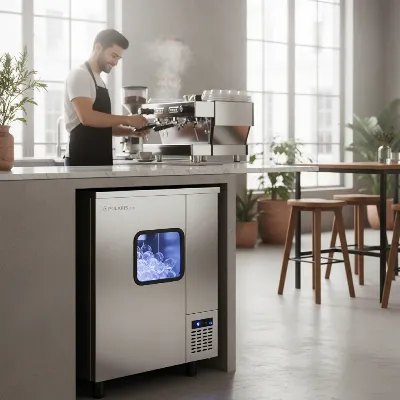 Undercounter commercial ice maker perfectly integrated into a modern cafe kitchen space
Tips for Usage and Maintenance
Proper usage and consistent maintenance are paramount to extending the lifespan of your commercial ice maker and ensuring a continuous supply of clean, safe ice.
- Optimal Placement: Position the ice maker in a cool, well-ventilated area, away from direct sunlight and heat sources like ovens or dishwashers. This helps the machine operate more efficiently and prevents overheating.
- Regular Cleaning Schedule: Establish a strict cleaning routine. Daily, wipe down the exterior surfaces. Weekly, clean ice scoops, trays, and any removable parts with food-safe sanitizer. Monthly, check and clean condenser coils and inspect the water supply and drain lines. A deep cleaning, involving descaling and sanitizing the interior components like the evaporator, should be performed every three to six months, or more frequently depending on usage and water quality. Always follow the manufacturer’s instructions.
- Water Filtration: Install and regularly replace a high-quality water filter. This is crucial for preventing mineral buildup, which can lead to cloudy ice, reduced efficiency, and costly repairs. Clean water also ensures better-tasting ice.
- Professional Servicing: Schedule annual professional maintenance. Technicians can identify potential issues before they become major problems, ensuring the machine operates at peak performance and extending its life.
- Staff Training: Train all cafe staff on proper ice handling procedures, including the correct use of ice scoops and hygiene protocols to prevent contamination.
“A well-maintained ice maker not only ensures crystal-clear ice for our drinks but also drastically cuts down on unexpected service calls, which can be a real disruption during peak hours.” – Maria Rodriguez, Cafe Manager.
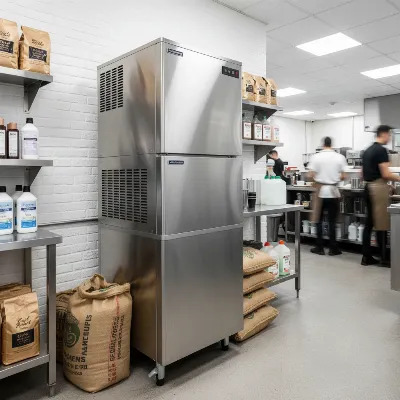 Modular commercial ice maker head sitting on a large storage bin in a busy cafe's back-of-house area
Conclusion
Choosing the best heavy-duty commercial ice maker for your small cafe is a strategic investment that impacts both daily operations and customer experience. By carefully considering your cafe’s specific ice needs, the available space, the ideal ice type, and crucial features like durability and energy efficiency, you can select a machine that serves as a reliable backbone for your beverage program. Prioritize consistent maintenance and proper usage to maximize your investment. A thoughtfully chosen and well-cared-for ice maker will ensure your cafe always has the perfect ice to keep customers refreshed and coming back for more.
What factors are most critical for your cafe when considering a new ice maker investment?
Frequently Asked Questions
What daily ice production capacity is typically recommended for a small cafe?
For most small cafes, a daily ice production capacity ranging from 50 to 200 pounds (approximately 23-91 kg) is generally sufficient. It’s essential to calculate your cafe’s peak hourly and daily ice consumption, then add a 20-30% buffer to ensure you never run out during busy periods.
Are undercounter ice makers powerful enough for a busy small cafe?
Yes, many undercounter ice makers are designed for heavy-duty commercial use and can be perfectly adequate for a busy small cafe. They offer capacities often up to 200 lbs/day, which can meet the demands of most small establishments while conserving precious floor space.
What’s the best type of ice for iced coffee and blended drinks in a cafe?
For iced coffee and blended drinks, nugget ice (also known as chewable or pearl ice) is often preferred. Its soft, porous texture allows it to blend easily and absorb flavors, enhancing the drink experience. Cube ice is also a versatile option, especially half-cubes, for general use.
How often should a commercial ice maker in a cafe be cleaned?
A commercial ice maker should have a daily exterior wipe-down, weekly cleaning of removable parts and the ice bin, and monthly checks of condenser coils and filters. A thorough deep cleaning, including descaling and sanitizing internal components, is recommended every three to six months.
What are the top brands for reliable commercial ice makers for small businesses?
Several brands are highly regarded for their reliability and performance in small commercial settings. Hoshizaki is known for durability and energy efficiency, while Manitowoc and its sister brand Koolaire offer reliable options. Scotsman is also a strong contender, particularly for sanitation and consistent production
Frequently Asked Questions
What daily ice production capacity is typically recommended for a small cafe?
For most small cafes, a daily ice production capacity ranging from 50 to 200 pounds (approximately 23-91 kg) is generally sufficient. It's essential to calculate your cafe's peak hourly and daily ice consumption, then add a 20-30% buffer to ensure you never run out during busy periods.
Are undercounter ice makers powerful enough for a busy small cafe?
Yes, many undercounter ice makers are designed for heavy-duty commercial use and can be perfectly adequate for a busy small cafe. They offer capacities often up to 200 lbs/day, which can meet the demands of most small establishments while conserving precious floor space.
What's the best type of ice for iced coffee and blended drinks in a cafe?
For iced coffee and blended drinks, nugget ice (also known as chewable or pearl ice) is often preferred. Its soft, porous texture allows it to blend easily and absorb flavors, enhancing the drink experience. Cube ice is also a versatile option, especially half-cubes, for general use.
How often should a commercial ice maker in a cafe be cleaned?
A commercial ice maker should have a daily exterior wipe-down, weekly cleaning of removable parts and the ice bin, and monthly checks of condenser coils and filters. A thorough deep cleaning, including descaling and sanitizing internal components, is recommended every three to six months.
What are the top brands for reliable commercial ice makers for small businesses?
Several brands are highly regarded for their reliability and performance in small commercial settings. Hoshizaki is known for durability and energy efficiency, while Manitowoc and its sister brand Koolaire offer reliable options. Scotsman is also a strong contender, particularly for sanitation and consistent production.
Selecting the Right Ice Maker for Your Cafe
A systematic approach to choosing a commercial ice maker, considering your cafe's specific demands and operational environment, will ensure you choose a machine that integrates seamlessly and performs reliably.
Accurately calculate your daily ice requirements, factoring in peak demand periods. Estimate 1-2 pounds of ice per customer per day for beverages, adding a 20-30% buffer. Measure available space precisely, accounting for 4-6 inches of ventilation clearance, and verify necessary electrical and plumbing hookups.
Select an undercounter ice maker for limited space and moderate demand, or a modular system for higher volume. Pinpoint the ice type that best complements your menu: cube ice for general beverages, nugget ice for blended drinks, or flake ice for food displays. Prioritize machines built with durable materials like stainless steel from reputable brands.
Evaluate cooling methods (air-cooled for ease, water-cooled for hot environments). Opt for brands known for reliability like Hoshizaki, Manitowoc, or Scotsman. Look for ENERGY STAR certified models for efficiency and features that simplify cleaning and maintenance, ensuring NSF-certification for food safety.
Position the ice maker in a cool, well-ventilated area. Establish a strict cleaning routine: daily exterior wipe-down, weekly cleaning of removable parts, monthly checks of condenser coils, and deep cleaning every three to six months. Install and regularly replace a high-quality water filter to prevent mineral buildup and ensure clean ice.
Get our weekly buyer guide
Practical specs, not advice. Unsubscribe anytime.

I was debating between an undercounter and a modular unit for my coffee shop. Ended up going with a modular one that produces around 250 pounds a day, and the flexibility of having a separate ice head and storage bin is really convenient. It keeps up with demand even on our busiest days, which is exactly what we needed.
We got an undercounter ice maker, not a Hoshizaki, and while it makes enough ice for our needs (around 100 lbs), it’s a bit louder than I expected. It’s not terrible, but you can definitely hear it running in the background. I wish I’d paid more attention to noise levels when I was looking at different models.
We just installed a Hoshizaki undercounter unit in our cafe, and it’s been a game-changer. The 150 pounds of ice it makes daily is perfect for our busy mornings and lunch rush. It fits right under the counter, which was a huge plus since space is at a premium for us. Definitely recommend it for any small cafe looking to upgrade.
Our old ice machine was constantly breaking down, so we invested in a Manitowoc undercounter model. It’s been incredibly reliable, and the ice quality is fantastic. It handles our cafe’s demand for cold brew and iced lattes without any issues, even during peak hours. Very happy with this heavy-duty choice.