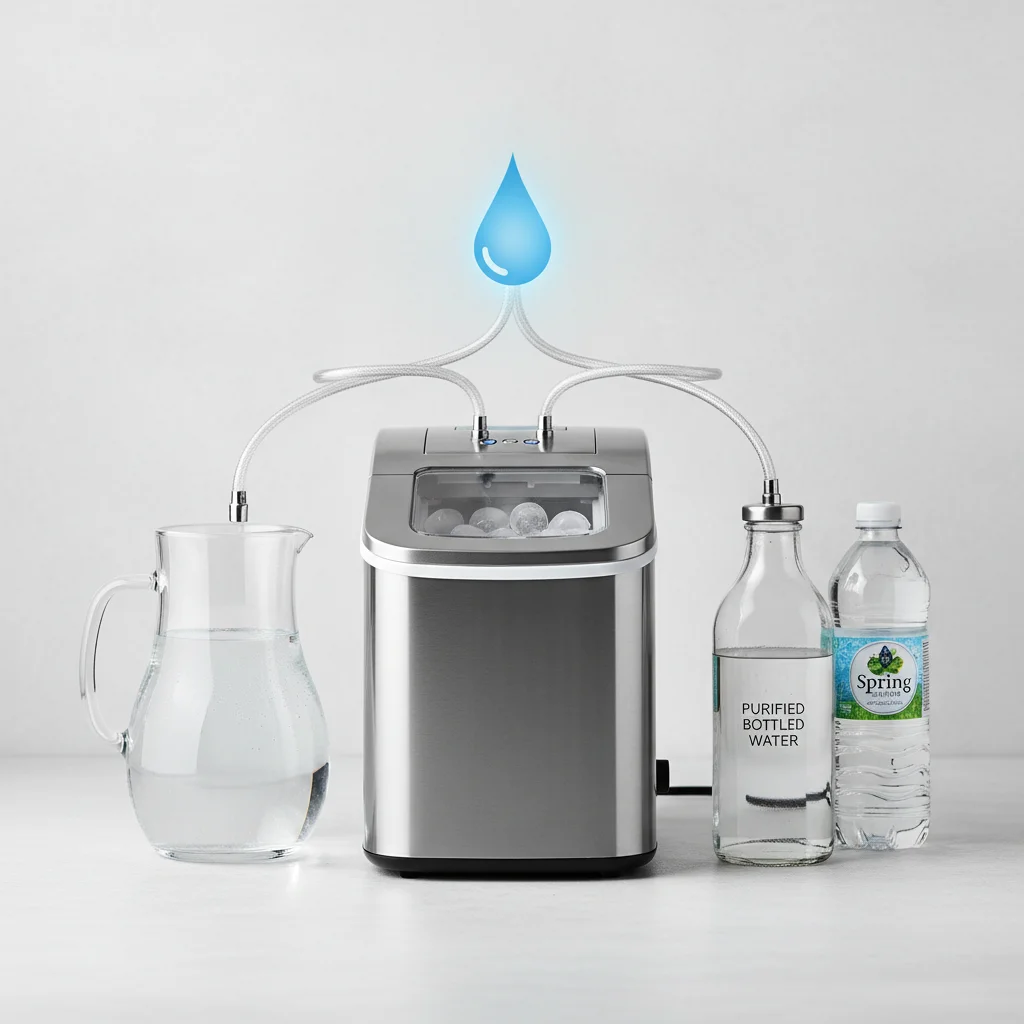
Choosing the right water source for your ice maker is crucial for both the taste of your ice and the longevity of your appliance. Generally, filtered water is the best option, offering a balance of purity and convenience. While tap water is often acceptable, it can introduce impurities that affect ice quality and potentially damage the machine over time. Bottled water, though pure, is typically an impractical and expensive choice for regular use.
Understanding Tap Water for Ice Makers
Tap water quality varies significantly by region. It often contains minerals like calcium and magnesium, which contribute to hard water. These minerals can lead to scale buildup inside your ice maker, reducing its efficiency and potentially causing malfunctions. Chlorine, commonly used to disinfect tap water, can also impart an unpleasant taste to your ice. While most modern ice makers are designed to handle typical tap water, prolonged use with hard or heavily chlorinated water can shorten their lifespan and necessitate more frequent cleaning. For compare top ice maker on this site.
The Benefits of Filtered Water
Filtered water is widely considered the optimal choice for ice makers. A good water filter removes impurities such as chlorine, sediment, and dissolved solids, resulting in clearer, better-tasting ice. This also significantly reduces the risk of scale buildup, extending the life of your ice maker and minimizing maintenance. Many refrigerators with built-in ice makers come with integrated water filters, and external inline filters are readily available for portable or standalone units. Investing in a quality filter can save you money on repairs and replacements in the long run.
When to Consider Bottled Water
|
Our Picks for the Best Ice Maker in 2026
As an Amazon Associate I earn from qualifying purchases.
|
||
| Num | Product | Action |
|---|---|---|
| 1 | EUHOMY Countertop Ice Maker Machine with Handle, 26lbs in 24Hrs, 9 Ice Cubes Ready in 6 Mins, Auto-Cleaning Portable Ice Maker with Basket and Scoop, for Home/Kitchen/Camping/RV. (Black) |

|
| 2 | Silonn Nugget Ice Maker Countertop, Pebble Ice Maker with Soft Chewable Ice, One-Click Operation Ice Machine with Self-Cleaning, 33lbs/24H for Home,Kitchen,Office |
|
| 3 | Nugget Ice Maker Countertop, Silonn Chewable Pellet Ice Machine with Self-Cleanin Function, 33lbs/24H Portable Ice Makers for Home Kitchen Officce, Black |
|
| 4 | Frigidaire Countertop Crunchy Chewable Nugget Ice Maker, Compact, 33lbs per Day, Metallic Finish |
|
| 5 | FRIGIDAIRE Touchscreen Nugget Ice Maker, Countertop Ice Machine, Sonic Ice Maker with 33 lbs. Capacity, Slate |
|
| 6 | Typhur Fast Nugget Ice Maker Countertop with Self-Cleaning Pump, 35lbs/24H Crushed Pebble Ice Machine with Pellet Ice, 8 Packs Cleaner, Dual Ice Scoops for Home, Kitchen, Party, RV, Stainless Steel |
|
| 7 | Efficient Countertop Ice Maker |
|
| 8 | ETL Approval Clear Ice Cube Maker Countertop, 3 Crystal 1.6" Clear Ice Cube in 10-20Mins, Slow-Melting & Adjustable Ice Thickness, Ice Makers Countertop with Self-Cleaning for Kitchens/Home/Office |
|
| 9 | Silonn Ice Maker Countertop, Portable Ice Machine with Carry Handle, Self-Cleaning Ice Makers with Basket and Scoop, 9 Cubes in 6 Mins, 26 lbs per Day, Ideal for Home, Kitchen, Camping, RV |
|
| 10 | Frigidaire 26 Lbs per Day Portable Compact Maker, Ice Making Machine, Stainless, Medium |
|
Bottled water, particularly distilled or purified varieties, offers the highest level of purity. It’s free from minerals and contaminants, ensuring pristine ice. However, using bottled water for an ice maker is generally not practical for everyday use due to its cost and the environmental impact of plastic bottles. It might be a viable option for occasional use, such as during a power outage when your primary water source is unavailable, or if you have extremely poor tap water quality and no filtration system. For most households, the benefits do not outweigh the cost and inconvenience.
Impact on Ice Quality and Machine Longevity
The type of water you use directly impacts both the quality of your ice and the health of your machine. Hard water leads to cloudy ice and mineral deposits, which can clog water lines and reduce freezing efficiency. Chlorine can make ice taste stale or chemical. Using filtered water ensures clear, odorless, and great-tasting ice, enhancing your beverages. More importantly, it protects the internal components of your ice maker from corrosion and scale, preventing costly repairs and extending the appliance’s operational life. Regular maintenance, regardless of water source, is still important.
- Clearer Ice: Filtered water removes impurities that cause cloudiness.
- Better Taste: Eliminates chlorine and other off-flavors.
- Reduced Scale Buildup: Protects internal components from mineral deposits.
- Extended Appliance Life: Minimizes wear and tear on pumps and lines.
- Less Frequent Cleaning: Fewer contaminants mean less frequent descaling.
Making the Best Choice for Your Home
For most users, a high-quality water filter is the best solution for their ice maker. This provides clean, great-tasting ice while protecting your appliance. If you’re using a portable ice maker, consider a model with an integrated filter or use pre-filtered water from your refrigerator or a pitcher filter. For built-in units, ensure your refrigerator’s water filter is regularly changed. If you’re unsure about your tap water quality, a simple home test kit can provide valuable insights, helping you make an informed decision about the best water source for your ice maker.
Get our weekly buyer guide
Practical specs, not advice. Unsubscribe anytime.
