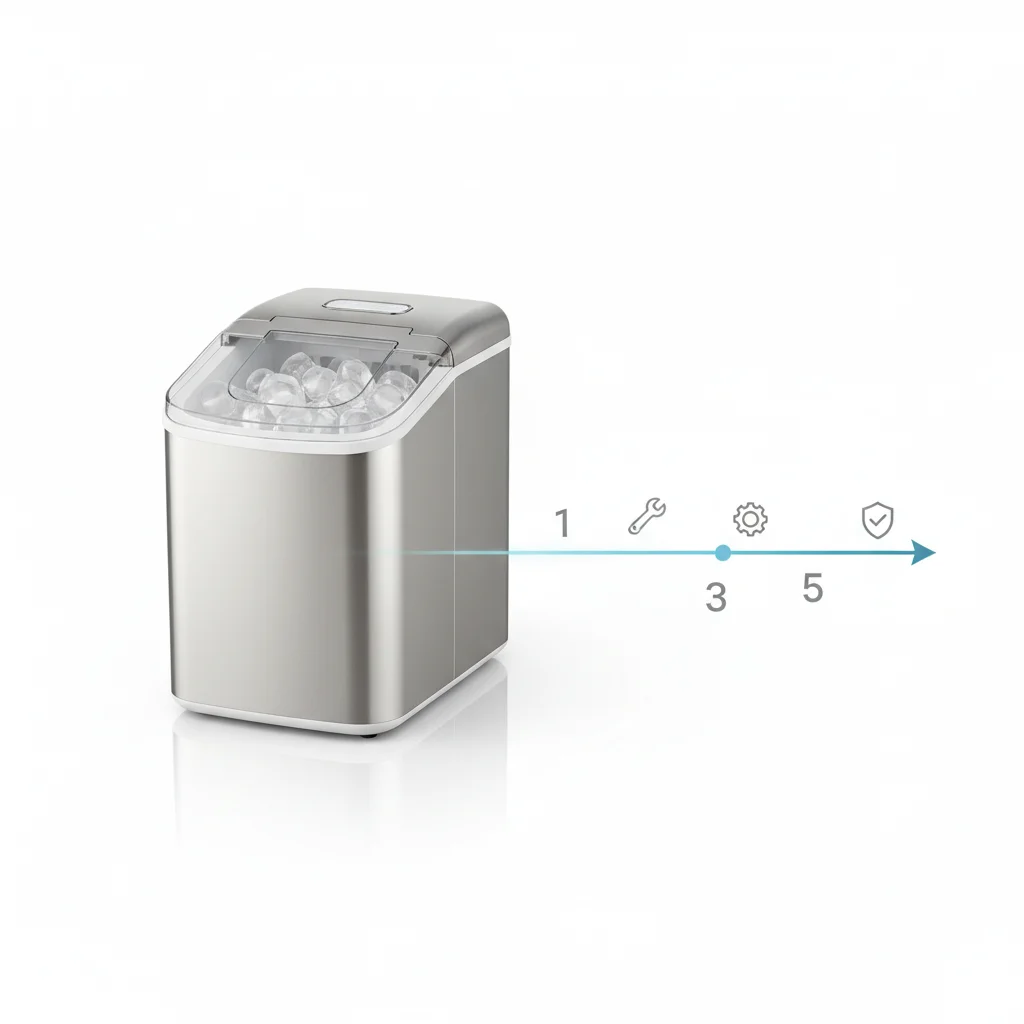
The typical portable ice maker lifespan ranges from 3 to 5 years, though some well-maintained units can last up to 7 years. This duration is influenced by usage frequency, maintenance habits, and component quality. Understanding these elements helps maximize your ice maker’s operational life and ensures you get the most value from your investment.
Factors Affecting Ice Maker Longevity
Several key factors determine how long your portable ice maker will continue to produce ice efficiently. High-quality components, such as durable compressors and robust water pumps, contribute significantly to a longer lifespan. Conversely, cheaper models often use less resilient parts that are prone to earlier failure. For shop curated ice maker on this site.
Usage frequency also plays a critical role. An ice maker used daily for multiple batches will naturally experience more wear and tear than one used only on weekends or for occasional gatherings. Overuse can strain the motor and other moving parts, leading to premature breakdown.
Maintenance Practices for Extended Life
Regular cleaning is paramount for extending your portable ice maker’s life. Mineral buildup from hard water can clog internal components, reducing efficiency and eventually causing malfunctions. Descaling your machine every 1-3 months, depending on water hardness, is crucial. This involves running a cleaning solution, often a mixture of water and vinegar, through the system to dissolve mineral deposits.
Proper storage is another important aspect. If you’re not using your ice maker for an extended period, ensure it’s thoroughly cleaned, dried, and stored in a cool, dry place. Leaving stagnant water in the reservoir can lead to mold and mildew growth, which can damage internal parts and create unpleasant odors.
- Clean the water reservoir and ice basket weekly.
- Descale the unit with a vinegar solution every 1-3 months.
- Ensure proper ventilation around the machine during operation.
- Drain and dry the unit completely before long-term storage.
- Avoid overfilling the water reservoir to prevent spills and strain on the pump.
Common Issues and Troubleshooting
|
Our Picks for the Best Ice Maker in 2026
As an Amazon Associate I earn from qualifying purchases.
|
||
| Num | Product | Action |
|---|---|---|
| 1 | ETL Approval Clear Ice Cube Maker Countertop, 3 Crystal 1.6" Clear Ice Cube in 10-20Mins, Slow-Melting & Adjustable Ice Thickness, Ice Makers Countertop with Self-Cleaning for Kitchens/Home/Office |

|
| 2 | Frigidaire Countertop Crunchy Chewable Nugget Ice Maker, Compact, 33lbs per Day, Metallic Finish |
|
| 3 | Nugget Ice Maker Countertop, Silonn Chewable Pellet Ice Machine with Self-Cleanin Function, 33lbs/24H Portable Ice Makers for Home Kitchen Officce, Black |
|
| 4 | Typhur Fast Nugget Ice Maker Countertop with Self-Cleaning Pump, 35lbs/24H Crushed Pebble Ice Machine with Pellet Ice, 8 Packs Cleaner, Dual Ice Scoops for Home, Kitchen, Party, RV, Stainless Steel |
|
| 5 | Silonn Nugget Ice Maker Countertop, Pebble Ice Maker with Soft Chewable Ice, One-Click Operation Ice Machine with Self-Cleaning, 33lbs/24H for Home,Kitchen,Office |
|
| 6 | Efficient Countertop Ice Maker |
|
| 7 | Silonn Ice Maker Countertop, Portable Ice Machine with Carry Handle, Self-Cleaning Ice Makers with Basket and Scoop, 9 Cubes in 6 Mins, 26 lbs per Day, Ideal for Home, Kitchen, Camping, RV |
|
| 8 | Frigidaire 26 Lbs per Day Portable Compact Maker, Ice Making Machine, Stainless, Medium |
|
| 9 | EUHOMY Countertop Ice Maker Machine with Handle, 26lbs in 24Hrs, 9 Ice Cubes Ready in 6 Mins, Auto-Cleaning Portable Ice Maker with Basket and Scoop, for Home/Kitchen/Camping/RV. (Black) |
|
| 10 | FRIGIDAIRE Touchscreen Nugget Ice Maker, Countertop Ice Machine, Sonic Ice Maker with 33 lbs. Capacity, Slate |
|
Many common portable ice maker issues can be resolved with simple troubleshooting, which in turn can prevent more serious damage and extend the unit’s life. For instance, if your ice maker isn’t producing ice, check the water level first. A low water level is a frequent cause of non-production. If the ice is cloudy, it often indicates mineral buildup, signaling a need for descaling.
Unusual noises can point to issues with the fan or compressor. Addressing these promptly, rather than ignoring them, can prevent a minor problem from escalating into a costly repair or complete unit failure. Consulting your owner’s manual for specific troubleshooting steps is always recommended.
When to Consider a Replacement
While proper maintenance can significantly extend your ice maker’s life, there comes a point when replacement becomes more economical than repair. If your unit frequently breaks down, requires expensive parts, or consumes excessive energy, it might be time to invest in a new model. Modern ice makers often feature improved energy efficiency and advanced technologies that can offer better performance and a longer expected lifespan.
Consider the cost of repairs versus the cost of a new unit. If a repair bill approaches half the price of a new, comparable ice maker, it’s usually a better financial decision to replace it. Look for models with good warranty coverage and positive reviews regarding durability.Investing in a slightly higher-priced model with a reputation for reliability can save you money and frustration in the long run.
Frequently Asked Questions
What is the average lifespan of a portable ice maker?
The average lifespan of a portable ice maker is typically 3 to 5 years. However, with diligent maintenance and less frequent use, some high-quality units can last up to 7 years.
How does usage frequency impact an ice maker's durability?
Usage frequency significantly impacts durability; an ice maker used daily for multiple batches will experience more wear and tear than one used occasionally. Overuse can strain components like the motor, leading to premature breakdown.
What are the most important maintenance tips for extending ice maker life?
The most important maintenance tips include regular descaling every 1-3 months to prevent mineral buildup and weekly cleaning of the water reservoir and ice basket. Proper drying and storage in a cool, dry place are also crucial for long-term non-use.
When should I consider replacing my portable ice maker?
You should consider replacing your portable ice maker when repair costs approach half the price of a new unit, or if it frequently breaks down, requires expensive parts, or consumes excessive energy. Modern ice makers often offer improved energy efficiency and performance.
Can hard water affect my portable ice maker's longevity?
Yes, hard water can significantly affect your portable ice maker's longevity due to mineral buildup. These deposits can clog internal components, reduce efficiency, and cause malfunctions, necessitating regular descaling to prevent damage.
Get our weekly buyer guide
Practical specs, not advice. Unsubscribe anytime.

I’ve had my portable ice maker for almost 4 years now, and it’s still going strong! I make sure to clean it regularly, especially the water reservoir, and descale it every few months. It really makes a difference in how long these things last. Definitely worth the investment for fresh ice whenever I need it.
My GE portable ice maker has been a workhorse for over 5 years now! I’m pretty diligent about maintenance, always draining it after use and wiping it down. It’s great to know that proper care can really push these units past the typical 3-5 year lifespan. I’m hoping to get a couple more years out of it!
I got a portable ice maker for our RV trips, and it’s been a game-changer. We don’t use it every day, mostly just on weekends when we’re camping. It’s been about 3 years, and it’s still working perfectly. I think the less frequent use definitely helps extend its life, just like the article mentioned.
Mine only lasted about 2.5 years before the compressor started making weird noises and then just quit. I probably used it daily, so maybe that’s why. I wish I had known more about how usage frequency impacts the lifespan before I bought a cheaper model. Next time I’ll invest in one with better components.