Descaling your portable ice maker with white vinegar is a simple, cost-effective method to remove limescale buildup, restore efficiency, and improve ice quality. Limescale, primarily calcium carbonate from hard water, can clog internal components, reduce ice production, and affect taste. Regular descaling every 1 to 3 months using a 1:1 vinegar-to-water solution ensures crystal-clear ice and extends the appliance’s lifespan.
Understanding Limescale and Its Impact on Your Portable Ice Maker
Limescale is a hard, chalky deposit, consisting mainly of calcium carbonate, that builds up inside water-using appliances. This mineral residue is particularly prevalent in areas with hard water, where high concentrations of dissolved minerals are present. When water evaporates or is heated, these minerals are left behind, gradually forming layers of scale.
In a portable ice maker, limescale can accumulate on crucial components such as the water pump, water lines, evaporator, and ice tray. This buildup has several detrimental effects. Firstly, it reduces the machine’s efficiency, making it work harder and consume more energy to produce ice. Secondly, it can obstruct water flow, leading to smaller ice cubes or even no ice production at all. Thirdly, limescale can harbor bacteria and affect the taste and smell of your ice, making it undesirable for consumption. Regular descaling is therefore essential, not just for performance but also for hygiene and extending the lifespan of your appliance.
Why Choose Vinegar for Descaling Your Portable Ice Maker
When it comes to descaling, you have options, but white vinegar stands out as an excellent, natural, and highly effective choice. Its acetic acid content makes it a powerful agent for dissolving mineral deposits like limescale without introducing harsh chemicals into your ice maker. This is a significant advantage, especially for an appliance that produces something you consume.
Compared to commercial descaling solutions, vinegar offers a safe, non-toxic alternative that is typically much more affordable and readily available in most households. While commercial cleaners are formulated for specific tough buildups, vinegar provides a gentle yet effective cleaning power perfect for routine maintenance and moderate limescale. The key is its ability to break down calcium and magnesium carbonates, allowing them to be flushed away easily.
Vinegar vs. Commercial Cleaners: A Comparison
| Feature | White Vinegar | Commercial Descaling Solutions |
|---|---|---|
| Natural | Yes, food-grade | Often chemical-based |
| Cost | Very low, widely available | Higher, specialized products |
| Effectiveness | Excellent for regular maintenance and moderate scale | Strong for heavy, stubborn scale; machine-specific formulas |
| Safety | Non-toxic, food-safe | Requires careful handling, chemical residues possible |
| Rinsing | Requires thorough rinsing to remove smell/taste | Requires thorough rinsing as per instructions |
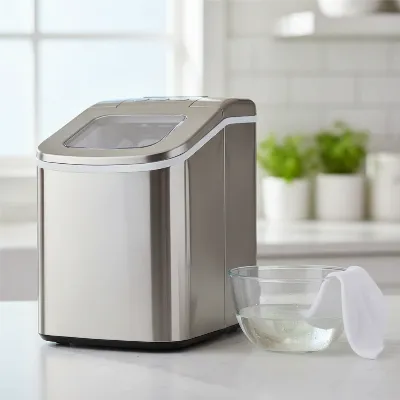 A close-up of a portable ice maker with a bowl of white vinegar and water solution beside it, illustrating natural descaling.
Step-by-Step DIY Descaling with Vinegar
Descaling your portable ice maker with vinegar is a straightforward process that requires minimal effort. Follow these steps carefully to ensure a thorough cleaning and optimal performance.
1. Preparation: Gather Your Materials
|
Our Picks for the Best Ice Maker in 2026
As an Amazon Associate I earn from qualifying purchases.
|
||
| Num | Product | Action |
|---|---|---|
| 1 | Efficient Countertop Ice Maker |

|
| 2 | FRIGIDAIRE Touchscreen Nugget Ice Maker, Countertop Ice Machine, Sonic Ice Maker with 33 lbs. Capacity, Slate |
|
| 3 | EUHOMY Countertop Ice Maker Machine with Handle, 26lbs in 24Hrs, 9 Ice Cubes Ready in 6 Mins, Auto-Cleaning Portable Ice Maker with Basket and Scoop, for Home/Kitchen/Camping/RV. (Black) |
|
| 4 | Silonn Ice Maker Countertop, Portable Ice Machine with Carry Handle, Self-Cleaning Ice Makers with Basket and Scoop, 9 Cubes in 6 Mins, 26 lbs per Day, Ideal for Home, Kitchen, Camping, RV |
|
| 5 | Frigidaire 26 Lbs per Day Portable Compact Maker, Ice Making Machine, Stainless, Medium |
|
| 6 | Frigidaire Countertop Crunchy Chewable Nugget Ice Maker, Compact, 33lbs per Day, Metallic Finish |
|
| 7 | Silonn Nugget Ice Maker Countertop, Pebble Ice Maker with Soft Chewable Ice, One-Click Operation Ice Machine with Self-Cleaning, 33lbs/24H for Home,Kitchen,Office |
|
| 8 | Nugget Ice Maker Countertop, Silonn Chewable Pellet Ice Machine with Self-Cleanin Function, 33lbs/24H Portable Ice Makers for Home Kitchen Officce, Black |
|
| 9 | Typhur Fast Nugget Ice Maker Countertop with Self-Cleaning Pump, 35lbs/24H Crushed Pebble Ice Machine with Pellet Ice, 8 Packs Cleaner, Dual Ice Scoops for Home, Kitchen, Party, RV, Stainless Steel |
|
| 10 | ETL Approval Clear Ice Cube Maker Countertop, 3 Crystal 1.6" Clear Ice Cube in 10-20Mins, Slow-Melting & Adjustable Ice Thickness, Ice Makers Countertop with Self-Cleaning for Kitchens/Home/Office |
|
Before you begin, gather everything you’ll need. You will require white vinegar, fresh water (filtered or distilled is best if you have hard water), a soft cloth, and a small brush or Q-tips for hard-to-reach areas. Crucially, always start by unplugging your ice maker from the power outlet to ensure safety. Once unplugged, remove the ice basket and completely drain any remaining water from the reservoir using the drain plug, usually located at the bottom or back of the unit.
2. Making the Descaling Solution
For most portable ice makers, a 1:1 ratio of white vinegar to water works best. For example, if your reservoir holds two liters, you would use one liter of vinegar and one liter of water. Some sources suggest using undiluted vinegar for very heavy scale, but for regular maintenance, the diluted solution is sufficient. Mix these two liquids thoroughly in a separate container before pouring them into your ice maker’s water reservoir. Fill the reservoir up to its maximum fill line with this cleaning solution.
3. Running the Cleaning Cycle
Once the vinegar solution is in the reservoir, plug your ice maker back in. Many modern portable ice makers feature a dedicated “clean” or “self-clean” button. If your machine has this function, press it to initiate the cleaning cycle. The machine will then circulate the vinegar solution through its internal components, dissolving limescale and sanitizing the system. If your ice maker does not have a specific cleaning mode, simply run a normal ice-making cycle. Allow the machine to complete the cycle until the reservoir is empty, or if it produces ice, discard all the ice made during this phase—do not use it for consumption.
4. Rinsing the System
After the cleaning cycle is complete and the vinegar solution has circulated, unplug the machine again. Carefully drain all the vinegar solution completely from the reservoir. This step is vital to ensure no vinegar taste lingers in your ice. Close the drain plug, then fill the water reservoir with fresh, clean water up to the fill line. Plug the machine back in and run another full ice-making cycle (or cleaning cycle, if applicable) with just fresh water. This will flush out any remaining vinegar residue from the system. Discard any ice produced during this rinse cycle as well.
5. Manual Wipe Down and Drying
Once the rinse cycle is finished, unplug the ice maker one final time and drain all the rinse water. Now, take a soft cloth, lightly dampened with either fresh water or a mild soap and water solution, and thoroughly wipe down the interior of the ice storage area, the ice basket, and the ice scoop. For hard-to-reach crevices, a Q-tip or a small, soft brush can be very effective. Allow all parts to air dry completely before reassembling your ice maker. This helps prevent any mold or mildew from forming.
Regular descaling, ideally every 1 to 3 months depending on your water hardness and usage frequency, will keep your portable ice maker running smoothly and efficiently.
“Maintaining my ice maker with a simple vinegar clean saves me money and keeps my drinks tasting fresh. It’s an easy hack every ice maker owner should know.” – Sarah L., Home Appliance Enthusiast
Conclusion
A well-maintained portable ice maker is a true convenience, providing refreshing ice whenever you need it. Limescale buildup, while inevitable, doesn’t have to be a permanent problem. By following this simple DIY guide, you can effectively descale your portable ice maker using inexpensive and natural white vinegar. This routine not only ensures the longevity and efficiency of your appliance but also guarantees that your ice is always clean, clear, and free from off-flavors. Taking a little time for this essential maintenance will pay off with consistently perfect ice. How often will you make descaling a part of your kitchen routine?
Frequently Asked Questions
How often should I descale my portable ice maker with vinegar?
The frequency depends on your water hardness and how often you use the machine. For average use and moderately hard water, descaling every 1 to 3 months is a good practice. If you notice a decrease in ice production or cloudy ice, it’s likely time for a cleaning.
Can I use other types of vinegar besides white vinegar?
It is strongly recommended to use white vinegar. Other types of vinegar, such as apple cider vinegar, may contain sugars or other impurities that could leave residues, odors, or even promote bacterial growth in your ice maker. White vinegar is clear, pure, and has the ideal acetic acid concentration for descaling.
What if my portable ice maker has a strong vinegar smell after cleaning?
A lingering vinegar smell or taste indicates that the rinsing step was not thorough enough. Ensure you run at least one, and preferably two, full cycles with fresh, clean water after the vinegar solution. Always discard all ice produced during these rinse cycles. You can also wipe down the interior manually with a damp cloth to help remove any remaining odor.
Frequently Asked Questions
How often should I descale my portable ice maker with vinegar?
For average use and moderately hard water, descaling your portable ice maker every 1 to 3 months is recommended. If you observe reduced ice production or cloudy ice, it indicates a need for immediate cleaning to prevent further mineral buildup.
Can I use other types of vinegar besides white vinegar for descaling?
It is strongly recommended to use only white vinegar for descaling your portable ice maker. Other vinegars, like apple cider vinegar, contain sugars and impurities that can leave residues, odors, or even foster bacterial growth within the machine, compromising hygiene and performance.
What if my portable ice maker smells like vinegar after cleaning?
A persistent vinegar smell or taste after cleaning indicates insufficient rinsing. To eliminate this, run at least one, and ideally two, full cycles with fresh, clean water after the vinegar solution, discarding all ice produced during these rinse cycles. A manual wipe-down with a damp cloth can also help remove residual odors.
Why is limescale harmful to my portable ice maker?
Limescale, primarily calcium carbonate, harms your portable ice maker by reducing its efficiency, obstructing water flow, and potentially harboring bacteria. This buildup forces the machine to work harder, leading to smaller or no ice cubes, and can affect the taste and smell of your ice, shortening the appliance's lifespan.
Is white vinegar more effective than commercial descaling solutions?
White vinegar is highly effective for routine maintenance and moderate limescale buildup due to its acetic acid content, offering a safe and natural alternative. Commercial descaling solutions are often stronger and formulated for heavy, stubborn scale, but vinegar is a cost-effective and non-toxic choice for regular cleaning.
Descale Your Portable Ice Maker with Vinegar
Follow these five simple steps to effectively descale your portable ice maker using white vinegar, ensuring optimal performance and clean ice.
Collect white vinegar, fresh water, a soft cloth, and a small brush or Q-tips. Unplug the ice maker, remove the ice basket, and drain all remaining water from the reservoir for safety and thorough cleaning.
Mix white vinegar and water in a 1:1 ratio in a separate container; for example, use one liter of vinegar and one liter of water for a two-liter reservoir. Pour this solution into the ice maker's reservoir up to the maximum fill line.
Plug in the ice maker and activate its dedicated 'clean' or 'self-clean' function if available. If not, run a normal ice-making cycle until the reservoir is empty, discarding all ice produced during this phase as it is not safe for consumption.
Unplug the machine and drain the vinegar solution completely. Refill the reservoir with fresh, clean water and run another full ice-making or cleaning cycle to flush out any remaining vinegar residue. Discard all ice from this rinse cycle.
After the rinse, unplug and drain the machine one last time. Use a soft, damp cloth to wipe down the interior, ice storage area, basket, and scoop. Allow all components to air dry completely before reassembling to prevent mold or mildew.
Get our weekly buyer guide
Practical specs, not advice. Unsubscribe anytime.

I was so frustrated with my ice maker slowing down and the ice tasting a little off. This guide on using white vinegar was a lifesaver! I followed the 1:1 vinegar-to-water solution exactly, and my machine is back to making perfect, clear ice. It’s amazing how much difference regular descaling makes.
I used to just run water through my ice maker, but I never realized how much limescale was actually building up. The explanation of how limescale clogs internal components really hit home. After descaling with vinegar, my ice maker is quieter and the ice quality is noticeably improved. Highly recommend this maintenance.
My portable ice maker was definitely suffering from hard water issues, and I could see the chalky deposits. This method for removing calcium carbonate buildup worked really well. I appreciate knowing that I should be doing this every 1 to 3 months to keep it running efficiently. My ice production is much better now.
The instructions for descaling with vinegar were pretty clear, and it did help with the limescale buildup. However, I found the vinegar smell lingered a bit longer than I expected, even after multiple rinses. It eventually went away, but it was a minor annoyance. Still, it’s a cost-effective method.