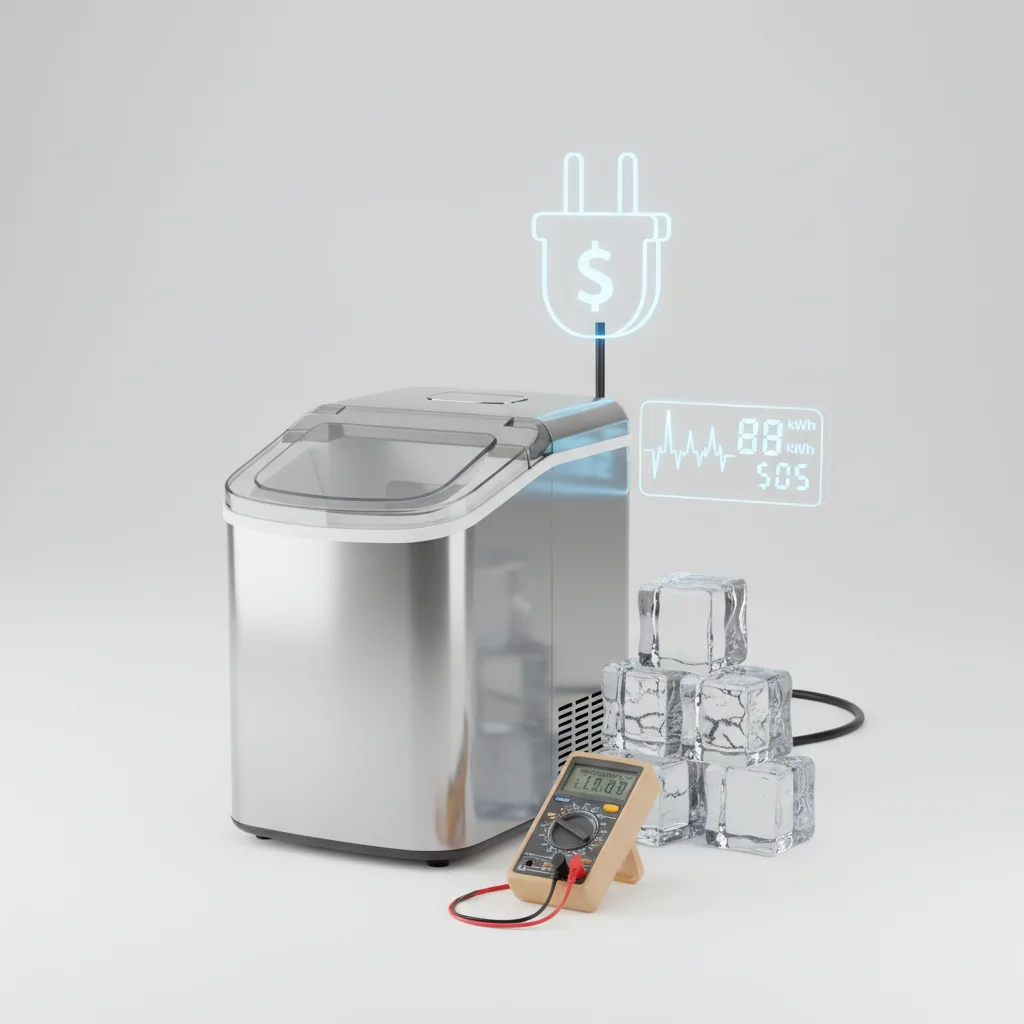
Understanding your ice maker’s energy consumption is key to managing household utility costs. On average, a typical portable ice maker uses between 100 to 150 watts of power, translating to an operational cost of approximately $0.01 to $0.02 per hour, or about $0.24 to $0.48 per day if run continuously. This figure can vary significantly based on the model, its efficiency, and your local electricity rates. Factors like the type of ice maker (portable, countertop, built-in), its capacity, and how frequently it’s used all play a role in its overall energy footprint.
Factors Influencing Ice Maker Energy Use
Several elements contribute to how much electricity your ice maker consumes. The most significant factor is the wattage of the unit; higher wattage generally means more power usage. However, efficiency ratings also matter. Newer models often incorporate energy-saving technologies that allow them to produce ice with less power. The ambient temperature of the room where the ice maker is located also impacts its performance and energy draw. A warmer environment forces the machine to work harder to maintain freezing temperatures, thus using more electricity. For best ice maker roundups on this site.
The type of ice maker is another crucial factor. Portable and countertop models typically have lower wattage and energy consumption compared to larger, built-in or commercial units. Built-in ice makers, while often more powerful, are also designed for continuous operation and may have better insulation, which can help with long-term efficiency. The frequency of ice production cycles also directly correlates with energy use; the more ice you make, the more power the machine will consume.
Calculating Your Ice Maker’s Daily and Monthly Cost
To accurately estimate the cost of running your ice maker, you’ll need its wattage and your local electricity rate. Most ice makers list their wattage on a label or in the user manual. Electricity rates are usually expressed in cents per kilowatt-hour (kWh). For example, if your ice maker is 120 watts (0.12 kW) and runs for 8 hours a day, and your electricity rate is $0.15 per kWh, the daily cost would be 0.12 kW * 8 hours * $0.15/kWh = $0.144. Over a month (30 days), this would be approximately $4.32.
It’s important to consider that ice makers don’t run at peak wattage constantly. They cycle on and off to produce and maintain ice. Therefore, the continuous run time used in calculations should be an average of its active ice-making periods. Some models also have an ‘idle’ or ‘standby’ mode that consumes minimal power, which should be factored into long-term estimates.
Tips for Reducing Ice Maker Energy Consumption
|
Our Picks for the Best Ice Maker in 2026
As an Amazon Associate I earn from qualifying purchases.
|
||
| Num | Product | Action |
|---|---|---|
| 1 | Typhur Fast Nugget Ice Maker Countertop with Self-Cleaning Pump, 35lbs/24H Crushed Pebble Ice Machine with Pellet Ice, 8 Packs Cleaner, Dual Ice Scoops for Home, Kitchen, Party, RV, Stainless Steel |

|
| 2 | Frigidaire 26 Lbs per Day Portable Compact Maker, Ice Making Machine, Stainless, Medium |
|
| 3 | Frigidaire Countertop Crunchy Chewable Nugget Ice Maker, Compact, 33lbs per Day, Metallic Finish |
|
| 4 | ETL Approval Clear Ice Cube Maker Countertop, 3 Crystal 1.6" Clear Ice Cube in 10-20Mins, Slow-Melting & Adjustable Ice Thickness, Ice Makers Countertop with Self-Cleaning for Kitchens/Home/Office |
|
| 5 | EUHOMY Countertop Ice Maker Machine with Handle, 26lbs in 24Hrs, 9 Ice Cubes Ready in 6 Mins, Auto-Cleaning Portable Ice Maker with Basket and Scoop, for Home/Kitchen/Camping/RV. (Black) |
|
| 6 | Efficient Countertop Ice Maker |
|
| 7 | Silonn Ice Maker Countertop, Portable Ice Machine with Carry Handle, Self-Cleaning Ice Makers with Basket and Scoop, 9 Cubes in 6 Mins, 26 lbs per Day, Ideal for Home, Kitchen, Camping, RV |
|
| 8 | Silonn Nugget Ice Maker Countertop, Pebble Ice Maker with Soft Chewable Ice, One-Click Operation Ice Machine with Self-Cleaning, 33lbs/24H for Home,Kitchen,Office |
|
| 9 | FRIGIDAIRE Touchscreen Nugget Ice Maker, Countertop Ice Machine, Sonic Ice Maker with 33 lbs. Capacity, Slate |
|
| 10 | Nugget Ice Maker Countertop, Silonn Chewable Pellet Ice Machine with Self-Cleanin Function, 33lbs/24H Portable Ice Makers for Home Kitchen Officce, Black |
|
There are several practical ways to minimize the energy footprint of your ice maker. First, ensure the unit is placed in a cool, well-ventilated area, away from direct sunlight or heat sources. This prevents the compressor from overworking. Regularly cleaning your ice maker, especially the condenser coils, can also improve its efficiency. Dust and debris can hinder heat dissipation, forcing the machine to use more power.
Consider using a timer if your ice maker doesn’t need to run 24/7. You can set it to produce ice during off-peak electricity hours or only when you anticipate needing a fresh batch. For portable units, making a large batch of ice and then storing it in a freezer can be more energy-efficient than running the ice maker intermittently throughout the day. Finally, investing in an energy-efficient model with a good insulation rating can lead to significant long-term savings.
- Place the ice maker in a cool, shaded location.
- Clean condenser coils regularly to ensure optimal performance.
- Utilize a timer for scheduled operation, especially during off-peak hours.
- Store excess ice in a freezer to reduce continuous operation.
- Choose an energy-efficient model with superior insulation.
Comparing Different Ice Maker Types
The energy consumption varies significantly across different types of ice makers. Portable countertop ice makers are generally the most energy-efficient for occasional use, typically consuming between 100-150 watts. Built-in under-counter models, designed for higher capacity and continuous operation, might use 200-300 watts or more, but their efficiency per pound of ice can be better due to superior insulation and larger compressors. Commercial ice makers, as expected, have the highest energy draw, often ranging from 300 watts to over 1000 watts, depending on their production capacity.
When choosing an ice maker, consider your specific needs. If you only need ice for occasional gatherings, a portable unit is likely the most cost-effective in terms of energy. For daily, high-volume ice production, a more robust, energy-efficient built-in model might be a better long-term investment, despite a higher initial power draw. Always check the Energy Star rating if available, as these models are certified to meet strict energy efficiency guidelines.
Maintenance and Longevity
Proper maintenance not only extends the life of your ice maker but also ensures it operates at peak energy efficiency. Regular descaling prevents mineral buildup, which can impede the freezing process and force the compressor to work harder. Cleaning the water reservoir and ice bin prevents mold and mildew, ensuring hygienic ice and preventing blockages that could affect performance. Following the manufacturer’s cleaning schedule, typically every 1-3 months, is crucial.
Ensuring proper ventilation around the unit is also vital. Blocked vents can lead to overheating, which increases energy consumption and can shorten the lifespan of the compressor. A well-maintained ice maker will not only save you money on electricity bills but also reduce the likelihood of costly repairs or premature replacement.
Get our weekly buyer guide
Practical specs, not advice. Unsubscribe anytime.
