Portable ice makers typically use between 100 to 200 watts of power during operation, with some models briefly spiking higher during initial startup or when the compressor cycles on. This wattage consumption is crucial for users planning to operate these appliances in RVs, off-grid setups, or simply to manage household electricity usage effectively.
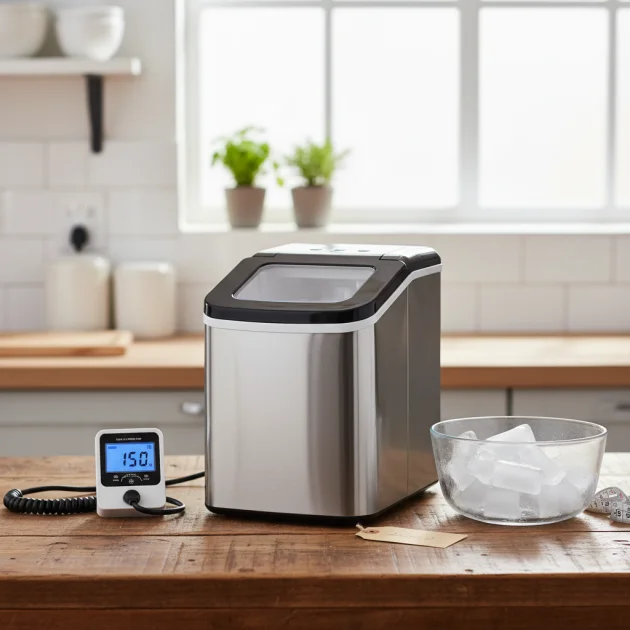
Understanding Ice Maker Power Consumption
The power draw of a portable ice maker isn’t constant; it fluctuates based on the operational phase. When the compressor is actively cooling and making ice, the wattage will be at its peak. Once the ice is made and the unit is in a maintenance or standby mode, the power consumption drops significantly. Factors like ambient temperature and the frequency of ice production cycles also influence overall energy use.
Average Wattage for Common Models
Most popular portable ice maker brands, such as those found in the 26-pound to 40-pound daily production range, fall within the 120-180 watt range. Smaller, more compact units designed for personal use might consume closer to 100 watts, while larger, faster-producing models could reach up to 200 watts. Always check the product specifications for the exact wattage of your specific model.
- Compact 26-lb models: 100-130 watts
- Mid-range 35-lb models: 130-160 watts
- Larger 40-lb+ models: 160-200 watts
- Clear ice makers: Often on the higher end due to more complex cooling cycles
Impact on RV and Off-Grid Power Systems

|
Our Picks for the Best Ice Maker in 2026
As an Amazon Associate I earn from qualifying purchases.
|
||
| Num | Product | Action |
|---|---|---|
| 1 | Silonn Ice Maker Countertop, Portable Ice Machine with Carry Handle, Self-Cleaning Ice Makers with Basket and Scoop, 9 Cubes in 6 Mins, 26 lbs per Day, Ideal for Home, Kitchen, Camping, RV |

|
| 2 | Silonn Nugget Ice Maker Countertop, Pebble Ice Maker with Soft Chewable Ice, One-Click Operation Ice Machine with Self-Cleaning, 33lbs/24H for Home,Kitchen,Office |
|
| 3 | Frigidaire 26 Lbs per Day Portable Compact Maker, Ice Making Machine, Stainless, Medium |
|
| 4 | Typhur Fast Nugget Ice Maker Countertop with Self-Cleaning Pump, 35lbs/24H Crushed Pebble Ice Machine with Pellet Ice, 8 Packs Cleaner, Dual Ice Scoops for Home, Kitchen, Party, RV, Stainless Steel |
|
| 5 | Efficient Countertop Ice Maker |
|
| 6 | Frigidaire Countertop Crunchy Chewable Nugget Ice Maker, Compact, 33lbs per Day, Metallic Finish |
|
| 7 | FRIGIDAIRE Touchscreen Nugget Ice Maker, Countertop Ice Machine, Sonic Ice Maker with 33 lbs. Capacity, Slate |
|
| 8 | ETL Approval Clear Ice Cube Maker Countertop, 3 Crystal 1.6" Clear Ice Cube in 10-20Mins, Slow-Melting & Adjustable Ice Thickness, Ice Makers Countertop with Self-Cleaning for Kitchens/Home/Office |
|
| 9 | EUHOMY Countertop Ice Maker Machine with Handle, 26lbs in 24Hrs, 9 Ice Cubes Ready in 6 Mins, Auto-Cleaning Portable Ice Maker with Basket and Scoop, for Home/Kitchen/Camping/RV. (Black) |
|
| 10 | Nugget Ice Maker Countertop, Silonn Chewable Pellet Ice Machine with Self-Cleanin Function, 33lbs/24H Portable Ice Makers for Home Kitchen Officce, Black |
|
For RV owners or those relying on solar power and battery banks, the wattage of a portable ice maker is a critical consideration. A 150-watt ice maker running for 8 hours would consume 1.2 kilowatt-hours (kWh) of electricity. This needs to be factored into your battery capacity and inverter capabilities. Many RV inverters can handle this load, but it’s important to ensure your system is adequately sized to prevent overloading or rapid battery depletion.
Tips for Efficient Ice Maker Use
To minimize power consumption, consider these tips. First, pre-chill the water you add to the reservoir; colder water requires less energy to freeze. Second, operate the ice maker in a cool, well-ventilated area, as higher ambient temperatures force the unit to work harder. Third, only run the ice maker when you need ice, rather than leaving it on continuously if not necessary. Finally, regular cleaning and maintenance ensure the unit operates at peak efficiency, preventing components from drawing excess power due to blockages or inefficiencies.
Comparing Wattage with Other Appliances
To put portable ice maker wattage into perspective, consider other common kitchen appliances. A typical microwave might use 600-1200 watts, a coffee maker 800-1500 watts, and a toaster 800-1500 watts. In comparison, a portable ice maker’s 100-200 watt draw is relatively modest, making it a feasible addition to many power-constrained environments like RVs or small apartments.
Frequently Asked Questions
How many watts does a portable ice maker typically use?
A portable ice maker typically uses between 100 to 200 watts of power during operation. Smaller models might consume around 100 watts, while larger, faster-producing units can reach up to 200 watts.
Does a portable ice maker's power consumption remain constant?
No, a portable ice maker's power consumption is not constant. It fluctuates based on the operational phase, drawing peak wattage when actively cooling and making ice, and significantly less in standby or maintenance mode.
How does ambient temperature affect ice maker power usage?
Higher ambient temperatures force the ice maker to work harder to produce ice, which increases its overall power consumption. Operating the unit in a cool, well-ventilated area can help minimize energy use.
Can a portable ice maker be used with an RV or off-grid power system?
Yes, a portable ice maker can be used with an RV or off-grid power system, but its wattage must be factored into your battery capacity and inverter capabilities. A 150-watt ice maker running for 8 hours consumes 1.2 kWh of electricity.
How does portable ice maker wattage compare to other kitchen appliances?
Compared to other common kitchen appliances, a portable ice maker's 100-200 watt draw is relatively modest. A microwave uses 600-1200 watts, and a coffee maker or toaster uses 800-1500 watts.
Minimize Portable Ice Maker Power Consumption
Reduce the electricity usage of your portable ice maker with these simple steps, ideal for RVs or off-grid living.
Always add pre-chilled water to the ice maker's reservoir. Colder water requires less energy for the unit to freeze, leading to more efficient operation and lower power draw.
Operate your ice maker in a cool, well-ventilated area. High ambient temperatures force the compressor to work harder, increasing wattage consumption. Good airflow helps maintain optimal operating conditions.
Avoid leaving the ice maker on continuously if not necessary. Only run the appliance when you actively need ice to prevent unnecessary power consumption during idle periods.
Regular cleaning and maintenance are crucial for peak efficiency. Keeping the unit clean prevents blockages and inefficiencies that could cause components to draw excess power.
Get our weekly buyer guide
Practical specs, not advice. Unsubscribe anytime.

I got a portable ice maker for my off-grid cabin, and while it makes ice, I was a bit disappointed with the initial startup wattage. It definitely goes over the 200-watt mark for a bit, which can be a challenge with my solar setup. It’s not a dealbreaker, but something to be aware of if you’re really pushing your power limits.
I was really worried about the power draw for my RV trips, but this breakdown on portable ice maker wattage was super helpful. I picked up a model that stays around 120 watts, and it’s been perfect for keeping drinks cold without draining my battery too fast. It’s great to finally understand how much power these things actually use.
Understanding the difference between active cooling and standby mode for ice makers was a game-changer for me. I used to just leave mine running all the time, but now I cycle it more efficiently. It’s a small change, but knowing how the wattage drops significantly when it’s just maintaining ice has definitely helped with my household electricity usage.
This info on power consumption fluctuations is spot on. I noticed my unit, a popular brand, definitely spikes when the compressor kicks in, just like it mentioned. It’s good to know that’s normal and not a sign of a problem. I’m glad I read this before I started troubleshooting something that wasn’t broken.