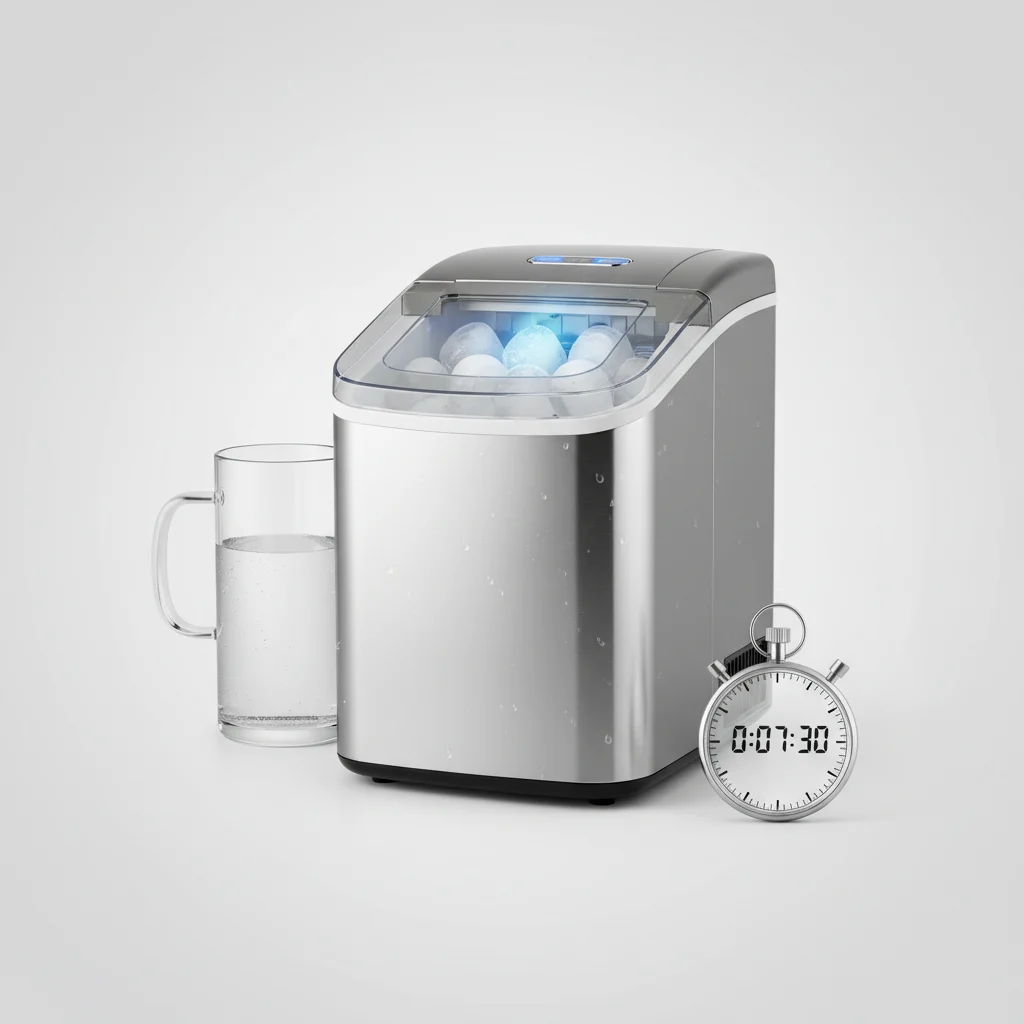
The freezing time for a portable ice maker typically ranges from 6 to 15 minutes for the first batch of ice. This initial cycle is often longer than subsequent cycles, which can produce new batches every 6-10 minutes. Factors such as ambient temperature, water temperature, and the specific model’s design significantly influence how quickly your portable ice maker can produce ice.
Factors Affecting Ice Production Speed
Several elements play a crucial role in determining how fast a portable ice maker can produce ice. The ambient temperature of the room is a primary factor; a warmer environment means the machine has to work harder to cool the water, thus extending the freezing time. Conversely, a cooler room can help speed up the process.
The temperature of the water you add to the reservoir also makes a difference. Using pre-chilled water can shave a minute or two off the initial freezing time, as the machine doesn’t need to expend as much energy to bring the water down to freezing point. Always ensure the water level is adequate, as low water can also impact efficiency.
Initial Startup vs. Continuous Production
When you first turn on a portable ice maker, it needs to cool down its internal components and the water in the reservoir. This initial cooling phase is why the first batch of ice often takes longer, sometimes up to 15 minutes. Once the machine is running and has reached its optimal operating temperature, subsequent ice production cycles become much faster.
Many models are designed to continuously produce ice as long as there’s water in the reservoir, with new batches appearing every 6-10 minutes. This efficiency makes them ideal for events where a steady supply of ice is needed.
Tips to Optimize Ice Maker Speed
|
Our Picks for the Best Ice Maker in 2026
As an Amazon Associate I earn from qualifying purchases.
|
||
| Num | Product | Action |
|---|---|---|
| 1 | EUHOMY Countertop Ice Maker Machine with Handle, 26lbs in 24Hrs, 9 Ice Cubes Ready in 6 Mins, Auto-Cleaning Portable Ice Maker with Basket and Scoop, for Home/Kitchen/Camping/RV. (Black) |

|
| 2 | ETL Approval Clear Ice Cube Maker Countertop, 3 Crystal 1.6" Clear Ice Cube in 10-20Mins, Slow-Melting & Adjustable Ice Thickness, Ice Makers Countertop with Self-Cleaning for Kitchens/Home/Office |
|
| 3 | Silonn Nugget Ice Maker Countertop, Pebble Ice Maker with Soft Chewable Ice, One-Click Operation Ice Machine with Self-Cleaning, 33lbs/24H for Home,Kitchen,Office |
|
| 4 | Efficient Countertop Ice Maker |
|
| 5 | FRIGIDAIRE Touchscreen Nugget Ice Maker, Countertop Ice Machine, Sonic Ice Maker with 33 lbs. Capacity, Slate |
|
| 6 | Silonn Ice Maker Countertop, Portable Ice Machine with Carry Handle, Self-Cleaning Ice Makers with Basket and Scoop, 9 Cubes in 6 Mins, 26 lbs per Day, Ideal for Home, Kitchen, Camping, RV |
|
| 7 | Frigidaire 26 Lbs per Day Portable Compact Maker, Ice Making Machine, Stainless, Medium |
|
| 8 | Typhur Fast Nugget Ice Maker Countertop with Self-Cleaning Pump, 35lbs/24H Crushed Pebble Ice Machine with Pellet Ice, 8 Packs Cleaner, Dual Ice Scoops for Home, Kitchen, Party, RV, Stainless Steel |
|
| 9 | Nugget Ice Maker Countertop, Silonn Chewable Pellet Ice Machine with Self-Cleanin Function, 33lbs/24H Portable Ice Makers for Home Kitchen Officce, Black |
|
| 10 | Frigidaire Countertop Crunchy Chewable Nugget Ice Maker, Compact, 33lbs per Day, Metallic Finish |
|
To get the most out of your portable ice maker and ensure it produces ice as quickly as possible, consider a few simple tips. First, place the ice maker in a cool, well-ventilated area, away from direct sunlight or heat sources. This reduces the workload on the compressor.
Second, always use cold water when filling the reservoir. This small step can significantly reduce the initial cooling time. Third, keep the lid closed during operation to maintain the internal temperature and prevent heat from escaping. Regularly cleaning your ice maker also ensures it operates at peak efficiency.
- Use pre-chilled water for faster initial ice production.
- Place the ice maker in a cool, shaded location.
- Keep the lid closed during operation to maintain temperature.
- Ensure proper ventilation around the unit.
- Regularly clean the machine to prevent mineral buildup.
Understanding Different Ice Maker Technologies
Not all portable ice makers are created equal, and the technology they employ can influence their freezing time. Some models use more powerful compressors and advanced cooling systems, allowing them to produce ice more rapidly. Others, particularly budget-friendly options, might have less robust systems, leading to slightly longer production times.
For example, some high-end portable ice makers can produce their first batch in as little as 6 minutes, while more basic models might take closer to 10-15 minutes. Always check the manufacturer’s specifications for an accurate estimate of a particular model’s ice production speed.
Maintenance for Consistent Performance
Proper maintenance is key to ensuring your portable ice maker consistently produces ice efficiently. Mineral buildup from hard water can impede the cooling elements, slowing down ice production. Regular descaling, typically every 1-3 months depending on water hardness, is essential.
Additionally, keeping the air vents clear of dust and debris allows the compressor to dissipate heat effectively, preventing overheating and maintaining optimal performance. A well-maintained machine will not only produce ice faster but also last longer.
Get our weekly buyer guide
Practical specs, not advice. Unsubscribe anytime.
