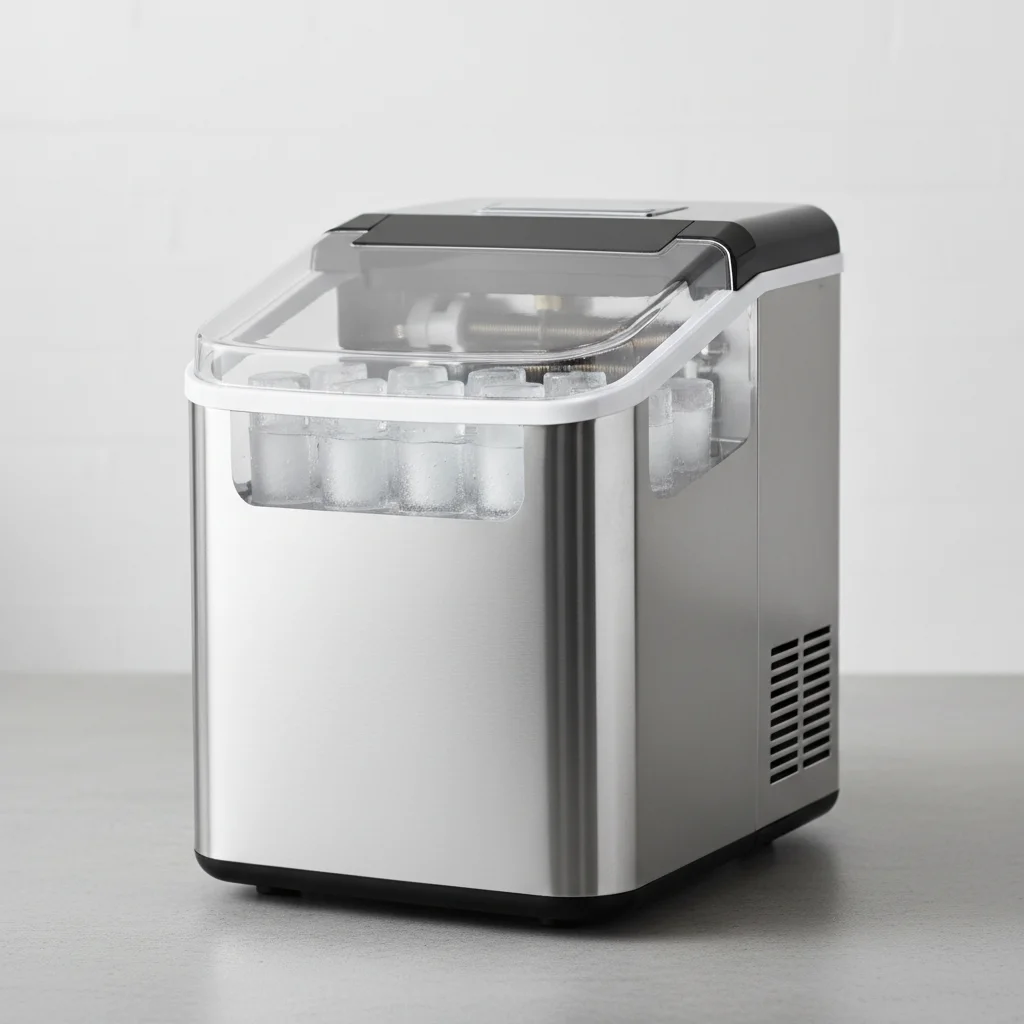
Clear ice makers produce crystal-clear ice by using a directional freezing process, which prevents the cloudy appearance often found in standard ice. This method freezes water in layers, pushing impurities and air bubbles out as the ice forms, resulting in a denser, slower-melting product. There are three primary mechanisms clear ice makers employ to achieve this clarity: insulated molds, circulating water systems, and specialized refrigeration cycles, each offering distinct advantages for home and commercial use.
The Science Behind Directional Freezing
Directional freezing is the core principle behind clear ice production. Unlike conventional freezers that freeze water from all directions simultaneously, clear ice makers freeze water from one direction. This controlled freezing allows dissolved gases and minerals, which cause cloudiness, to be pushed to the unfrozen portion of the water. As the ice sheet grows, these impurities are concentrated in a small, discardable section, leaving the main body of the ice perfectly clear. This process mimics how ice forms naturally in lakes and rivers, where the surface freezes first, pushing impurities downwards.
Types of Clear Ice Maker Technologies
Several technologies are employed in clear ice makers. The most common include insulated molds, circulating water systems, and specialized refrigeration cycles. Insulated molds, often found in smaller, consumer-grade units, create a thermal barrier on all sides except the top, forcing the ice to freeze downwards. Circulating water systems, prevalent in larger commercial and some high-end home units, continuously pump water over a freezing plate. This constant movement prevents air bubbles from getting trapped and washes away impurities. Specialized refrigeration cycles precisely control temperature gradients to optimize the directional freezing process, ensuring maximum clarity and efficiency.
- Insulated Molds: Simple, effective for small batches.
- Circulating Water Systems: High capacity, ideal for continuous clear ice production.
- Specialized Refrigeration: Advanced control for optimal clarity and energy efficiency.
- Gravity-Fed Systems: Water slowly drips over a cold plate, forming clear layers.
- Vibrating Plates: Gently shakes water to release trapped air bubbles during freezing.
Benefits of Using Clear Ice
|
Our Picks for the Best Ice Maker in 2026
As an Amazon Associate I earn from qualifying purchases.
|
||
| Num | Product | Action |
|---|---|---|
| 1 | Typhur Fast Nugget Ice Maker Countertop with Self-Cleaning Pump, 35lbs/24H Crushed Pebble Ice Machine with Pellet Ice, 8 Packs Cleaner, Dual Ice Scoops for Home, Kitchen, Party, RV, Stainless Steel |

|
| 2 | FRIGIDAIRE Touchscreen Nugget Ice Maker, Countertop Ice Machine, Sonic Ice Maker with 33 lbs. Capacity, Slate |
|
| 3 | Silonn Ice Maker Countertop, Portable Ice Machine with Carry Handle, Self-Cleaning Ice Makers with Basket and Scoop, 9 Cubes in 6 Mins, 26 lbs per Day, Ideal for Home, Kitchen, Camping, RV |
|
| 4 | Nugget Ice Maker Countertop, Silonn Chewable Pellet Ice Machine with Self-Cleanin Function, 33lbs/24H Portable Ice Makers for Home Kitchen Officce, Black |
|
| 5 | Efficient Countertop Ice Maker |
|
| 6 | EUHOMY Countertop Ice Maker Machine with Handle, 26lbs in 24Hrs, 9 Ice Cubes Ready in 6 Mins, Auto-Cleaning Portable Ice Maker with Basket and Scoop, for Home/Kitchen/Camping/RV. (Black) |
|
| 7 | Frigidaire 26 Lbs per Day Portable Compact Maker, Ice Making Machine, Stainless, Medium |
|
| 8 | Silonn Nugget Ice Maker Countertop, Pebble Ice Maker with Soft Chewable Ice, One-Click Operation Ice Machine with Self-Cleaning, 33lbs/24H for Home,Kitchen,Office |
|
| 9 | ETL Approval Clear Ice Cube Maker Countertop, 3 Crystal 1.6" Clear Ice Cube in 10-20Mins, Slow-Melting & Adjustable Ice Thickness, Ice Makers Countertop with Self-Cleaning for Kitchens/Home/Office |
|
| 10 | Frigidaire Countertop Crunchy Chewable Nugget Ice Maker, Compact, 33lbs per Day, Metallic Finish |
|
Beyond aesthetics, clear ice offers several practical benefits. Its density means it melts much slower than cloudy ice, keeping drinks colder for longer without diluting them as quickly. This is particularly advantageous for spirits and cocktails where maintaining the drink’s integrity is crucial. The absence of impurities also means clear ice has no off-flavors, ensuring the true taste of your beverage shines through. Furthermore, clear ice can elevate the presentation of any drink, adding a touch of sophistication to home entertaining or professional bar service.
Maintenance for Optimal Clarity
To ensure your clear ice maker consistently produces pristine ice, regular maintenance is essential. This includes periodic cleaning of the water reservoir and freezing components to prevent mineral buildup, which can hinder the directional freezing process and introduce cloudiness. Descaling with a vinegar solution or a commercial descaler is recommended every few months, especially in areas with hard water. Additionally, using filtered water can significantly improve ice clarity and reduce the frequency of cleaning. Always refer to your specific model’s user manual for detailed cleaning instructions and recommended maintenance schedules.
Choosing the Right Clear Ice Maker
When selecting a clear ice maker, consider factors such as capacity, speed, and the type of ice it produces (cubes, spheres, nuggets). For occasional use or small gatherings, a countertop model with an insulated mold might suffice. For frequent entertaining or a dedicated home bar, a larger unit with a circulating water system would be more appropriate. Commercial establishments will require high-capacity machines designed for continuous operation. Evaluate your specific needs and budget to find a clear ice maker that delivers consistent, high-quality clear ice for all your beverage requirements.
Frequently Asked Questions
How do clear ice makers prevent cloudy ice from forming?
Clear ice makers prevent cloudiness through directional freezing, which freezes water from one direction. This process pushes dissolved gases and minerals, the primary causes of cloudiness, to the unfrozen portion of the water, leaving the main ice body perfectly clear.
What are the main technologies used in clear ice machines?
The main technologies in clear ice machines include insulated molds, circulating water systems, and specialized refrigeration cycles. Insulated molds force downward freezing, circulating water systems continuously pump water to prevent air traps, and specialized refrigeration optimizes temperature gradients for clarity.
What are the benefits of using clear ice in drinks?
Clear ice offers several benefits, including slower melting due to its density, which keeps drinks colder longer without dilution. Its lack of impurities ensures no off-flavors, preserving the true taste of beverages, and it enhances drink presentation with a sophisticated look.
How often should I clean my clear ice maker for optimal performance?
For optimal performance, you should clean your clear ice maker's water reservoir and freezing components periodically to prevent mineral buildup. Descaling with a vinegar solution or commercial descaler is recommended every few months, especially in hard water areas, to maintain clarity.
Does using filtered water improve the quality of clear ice?
Yes, using filtered water can significantly improve ice clarity and reduce the frequency of cleaning required for your clear ice maker. Filtered water contains fewer dissolved minerals and impurities, which are the main culprits behind cloudy ice and mineral buildup.
Get our weekly buyer guide
Practical specs, not advice. Unsubscribe anytime.

Finally, an explanation that makes sense! I always thought clear ice was some kind of magic. Understanding the specialized refrigeration cycles helped me pick out the perfect unit for my home bar. The ice is dense and melts super slow, which is exactly what I needed for entertaining. No more watery drinks!
I appreciate the breakdown of how clear ice makers work. I always wondered why my regular freezer ice was so cloudy. I went with a model that uses an insulated mold, and while it does produce beautiful clear ice, it takes a bit longer than I expected for a full batch. Still, the quality is undeniable.
The information about pushing impurities out was really helpful. I bought a clear ice maker hoping to avoid all the dissolved gases and minerals in my tap water. It definitely makes clearer ice, but I still notice a slight taste difference sometimes, even after filtering my water first. It’s better than before, but not perfect.
I was so tired of cloudy ice diluting my drinks, especially my whiskey. This post really explained the science behind directional freezing well. I ended up getting one with a circulating water system, and it’s a game-changer. My cocktails look and taste so much better now, and the ice lasts way longer.