The best small ice makers for RV camping trips are portable countertop models that operate on 120V AC power, offering high daily production (26-44 lbs) and rapid ice delivery (6-15 minutes). While 12V DC units exist for off-grid use, 120V models provide more features and are easily powered via shore power, generators, or robust inverters. Key considerations for RVers include ice capacity, type, power source, and physical dimensions to ensure a continuous supply of fresh ice on the go.
This comprehensive guide will help you understand the different types of ice makers suitable for recreational vehicles, compare popular models, and arm you with the knowledge to select the best small ice maker for your unique RV camping lifestyle. Get ready to improve your on-the-road refreshment!
Essential Types of Small Ice Makers for RV Camping
When considering an ice maker for your RV, the primary distinction lies in their design and how they draw power. While built-in units exist in some high-end RVs, portable countertop models are overwhelmingly the most popular choice for their flexibility and compact footprint. For see our ice maker recommendations on this site.
Portable Countertop Ice Makers (120V AC)
These are the most common small ice makers you’ll encounter and are designed for versatility. They operate by freezing water around metal prongs, then releasing the formed ice into a basket.
- Advantages: Widely available from numerous brands, these machines boast excellent ice production capacities, often ranging from 26 to 44 pounds per day. They are quick, typically delivering the first batch of ice in as little as 6 to 15 minutes, ensuring you’re never long without a chilled beverage. You’ll find a variety of ice shapes, including popular bullet, classic cube, and chewable nugget ice. Many models come with user-friendly features like self-cleaning functions, which simplify maintenance, and indicator lights that alert you when the water reservoir is low or the ice basket is full.
- Considerations: The main point to is that these units primarily require 120V AC power. This means they operate best when your RV is connected to shore power at a campground, running a generator, or utilizing a robust inverter system connected to your RV’s battery bank. While efficient, the ice produced isn’t stored in a freezer compartment, so it will eventually melt if not transferred to a cooler or your RV’s freezer.
12V DC Compatible Ice Makers
While less common as dedicated standalone ice makers, some portable refrigerators or specialized units offer 12V DC operation, allowing them to run directly from your RV’s battery system.
- Advantages: The most significant benefit of a 12V DC unit is its ability to operate off-grid without the need for an inverter or generator, making it ideal for boondocking or remote campsites. They are designed to integrate seamlessly with your RV’s existing electrical infrastructure.
- Considerations: True standalone 12V ice makers are a niche product; typically, “12V ice makers” refer more often to portable compressor fridges with ice-making capabilities or small-batch units with lower production rates. They may also come with a higher price tag due to their specialized power requirements and potentially lower efficiency in ice production compared to their 120V counterparts. For most RVers, a 120V portable ice maker powered via an inverter or shore power offers a broader range of options and features.
Comparing Small Ice Makers for RVs
Selecting the best small ice maker means weighing various factors beyond just capacity. Here’s a look at key features and some popular models that RVers frequently consider, along with a detailed comparison table.
When evaluating models, consider not only their ice-making prowess but also practical elements like their physical dimensions, weight, and how much noise they produce, all of which are crucial in the confined space of an RV. Many top performers offer rapid ice production and come equipped with convenience features such as indicator lights for water levels and full ice bins, or self-cleaning cycles that reduce manual effort.
Some models, like the VIVOHOME Nugget Ice Maker, stand out for producing desirable chewable nugget ice and a high daily output, making it a favorite for those who prioritize specific ice types. Others, like the Igloo Premium, are renowned for their speed and integrated self-cleaning capabilities. For budget-conscious travelers, options like the Magic Chef often provide solid performance without breaking the bank. Meanwhile, premium choices such as the GE Profile Opal offer advanced features and aesthetically pleasing designs, albeit at a higher price point.
| Feature | VIVOHOME Nugget (Example) | Ecozy (Example) | Igloo Premium (Example) | NewAir AI-100BK (Example) | Magic Chef (Example) | GE Profile Opal (Example) |
|---|---|---|---|---|---|---|
| Capacity (lbs/24h) | Up to 44 | Up to 26 | Up to 33 | Up to 28 | Up to 27 | Up to 24-38 (Est.) |
| First Ice (mins) | Not specified | Not specified | ~7 | ~6 | Not specified | ~15 |
| Ice Type | Nugget | Bullet (2 sizes) | Bullet (2 sizes) | Bullet (3 sizes) | Bullet (2 sizes) | Nugget |
| Power (V) | 115V AC | 115V AC | 120V AC | 120V AC | 120V AC | 120V AC |
| Key Feature | Self-cleaning, transparent | Quiet, portable handle | Fast, self-cleaning, LED | Compact, fast | Budget-friendly | High quality, app control |
| Dimensions (LxWxH) | ~9.4″ x 13.2″ x 15.4″ | ~9.5″ x 11.5″ x 12.9″ (Est.) | ~14.1″ x 9.7″ x 11.5″ | ~11.8″ x 14.5″ x 15″ | ~19.9″ x 9.5″ x 12.9″ | ~10.75″ x 17.5″ x 16.25″ |
| Weight (lbs) | ~20 | ~15-20 (Est.) | ~22 | ~24 | ~18 | ~25-30 |
How to Choose the Right Small Ice Maker for Your RV
Choosing an ice maker for your RV is a personal decision that hinges on your specific camping habits and vehicle setup. By carefully assessing your needs and understanding the key features, you can find a machine that perfectly complements your adventures.
Determine Your Usage Needs
|
Our Picks for the Best Ice Maker in 2026
As an Amazon Associate I earn from qualifying purchases.
|
||
| Num | Product | Action |
|---|---|---|
| 1 | Nugget Ice Maker Countertop, Silonn Chewable Pellet Ice Machine with Self-Cleanin Function, 33lbs/24H Portable Ice Makers for Home Kitchen Officce, Black |

|
| 2 | Typhur Fast Nugget Ice Maker Countertop with Self-Cleaning Pump, 35lbs/24H Crushed Pebble Ice Machine with Pellet Ice, 8 Packs Cleaner, Dual Ice Scoops for Home, Kitchen, Party, RV, Stainless Steel |
|
| 3 | Silonn Ice Maker Countertop, Portable Ice Machine with Carry Handle, Self-Cleaning Ice Makers with Basket and Scoop, 9 Cubes in 6 Mins, 26 lbs per Day, Ideal for Home, Kitchen, Camping, RV |
|
| 4 | Frigidaire 26 Lbs per Day Portable Compact Maker, Ice Making Machine, Stainless, Medium |
|
| 5 | EUHOMY Countertop Ice Maker Machine with Handle, 26lbs in 24Hrs, 9 Ice Cubes Ready in 6 Mins, Auto-Cleaning Portable Ice Maker with Basket and Scoop, for Home/Kitchen/Camping/RV. (Black) |
|
| 6 | FRIGIDAIRE Touchscreen Nugget Ice Maker, Countertop Ice Machine, Sonic Ice Maker with 33 lbs. Capacity, Slate |
|
| 7 | Silonn Nugget Ice Maker Countertop, Pebble Ice Maker with Soft Chewable Ice, One-Click Operation Ice Machine with Self-Cleaning, 33lbs/24H for Home,Kitchen,Office |
|
| 8 | ETL Approval Clear Ice Cube Maker Countertop, 3 Crystal 1.6" Clear Ice Cube in 10-20Mins, Slow-Melting & Adjustable Ice Thickness, Ice Makers Countertop with Self-Cleaning for Kitchens/Home/Office |
|
| 9 | Frigidaire Countertop Crunchy Chewable Nugget Ice Maker, Compact, 33lbs per Day, Metallic Finish |
|
| 10 | Efficient Countertop Ice Maker |
|
Start by asking yourself a few crucial questions to pinpoint what you truly require from an RV ice maker. How much ice do you realistically need in a day for drinks, coolers, or other uses? Portable models typically produce between 20 to 44 pounds of ice every 24 hours, so matching this to your demand is essential. What type of ice do you prefer—bullet, nugget, or clear cubes? Some machines offer different sizes or shapes, which can impact your beverage experience.
Perhaps the most critical consideration for an RV is your available power source. Most portable ice makers run on 120V AC, meaning you’ll need shore power, a generator, or a reliable inverter. If you frequently boondock without these options, a truly 12V DC compatible unit might be a better (though often rarer and more specialized) fit. Lastly, think about the space constraints in your RV; carefully measure your available countertop or storage area, and consider the unit’s weight for easy movement.
Key Features to Look For
Once your basic needs are clear, examine the features that enhance convenience and performance in an RV setting.
- Fast Production: For spontaneous chilling needs, look for models that can produce their first batch of ice in under 10 to 15 minutes. This rapid output is perfect for quickly refilling drinks or a small cooler.
- Self-Cleaning Function: This feature is a huge time-saver and hygiene booster, simplifying the often tedious task of keeping the machine spotless. Even with self-cleaning, regular manual attention is still advised.
- Indicator Lights: These small but mighty features provide clear alerts for when the water reservoir needs refilling or when the ice basket is full, preventing interruptions in ice production.
- Drain Plug: An easily accessible drain plug is invaluable for quick emptying, especially before moving your RV or during routine cleaning.
- Noise Level: In the compact living space of an RV, a quieter ice maker can significantly improve comfort, particularly if you plan to run it overnight or in close quarters. Look for models explicitly advertised as “quiet” or with low decibel ratings.
- Durability and Build Quality: Opt for units with a robust construction, often featuring stainless steel exteriors, to withstand the vibrations and varying conditions of RV travel.
- Energy Efficiency: While most portable ice makers are fairly efficient, check the wattage if you’re planning to run it off an inverter or solar setup. Understanding its typical running wattage versus surge wattage can help manage your power budget more effectively.
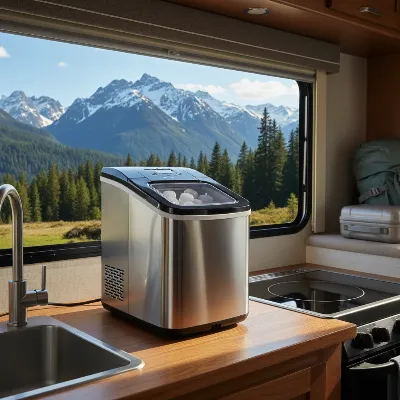 A sleek, compact portable ice maker on an RV countertop with a scenic mountain view outside the window.
Essential Usage and Maintenance Tips for RV Ice Makers
Proper usage and consistent maintenance are crucial for ensuring your small RV ice maker performs reliably and produces fresh, clean ice throughout your camping trips. These practices extend the life of your appliance and prevent common issues like mold or mineral buildup.
Maximizing Performance During Your Trip
- Optimal Placement: Always place your ice maker on a stable, level surface. Ensure there’s adequate ventilation around the unit, as proper airflow helps the compressor run efficiently and prevents overheating. Avoid direct sunlight, which can increase the melting rate of ice in the basket and make the machine work harder.
- Water Quality: The quality of your water directly impacts the taste of your ice and the longevity of your machine. Using filtered water or bottled water can prevent the buildup of mineral deposits and scale inside the ice maker, which can otherwise hinder its performance over time.
- Power Management: Be mindful of your ice maker’s power draw, especially if you’re running it from an inverter or a portable power station. Most portable ice makers draw between 100-200 watts while actively making ice, with a brief startup surge. While they don’t run continuously, understanding this consumption helps manage your RV’s battery life.
Keeping Your Ice Maker Spotless and Functional
Regular cleaning is the single most important maintenance task for your RV ice maker, vital for preventing the growth of bacteria, mildew, and mold.
-
Routine Cleaning: Aim to clean your ice maker at least every three to six months, or more frequently if you use it heavily, especially during warmer summer months.
-
The Cleaning Process:
- Unplug and Drain: Always disconnect the power before starting. Locate and pull the drain plug to completely empty any water from the reservoir.
- Remove Components: Take out the ice basket and any removable scoops or trays. Wash these thoroughly in warm, soapy water.
- Prepare Cleaning Solution: A common and effective solution is a mixture of one part white vinegar to ten parts water. Alternatively, you can use a mild, food-safe detergent solution or a specialized ice machine cleaner, always following the product’s instructions.
- Wipe Interior: Dip a soft washcloth or sponge into your cleaning solution, wring it out, and carefully wipe down all interior surfaces, including the water reservoir, ice-making prongs, and walls. For tight corners or crevices, a soft toothbrush or cotton swab can be very helpful. to clean the drain hole.
- Rinse and Run Cycle: After wiping, rinse the interior with clean water. Then, with the drain plug in place, pour fresh cleaning solution into the reservoir and run a few ice-making cycles (without intending to consume the ice). This helps circulate the solution through internal components.
- Final Rinse Cycles: Drain the cleaning solution completely. Then, fill the reservoir with clean, fresh water and run two to three more ice-making cycles, draining the water each time, to thoroughly rinse away any residual cleaning solution.
- Dry Thoroughly: After the final rinse and drain, wipe the interior dry with a clean, soft cloth. Ensuring the machine is completely dry before storage is key to preventing mold.
-
Water Filter Replacement: If your ice maker has a water filter, follow the manufacturer’s recommendations for replacement, typically every six months to a year.
-
Winterizing for Storage: For seasonal RVers, proper winterization is crucial. After a thorough cleaning and drying, ensure all water is drained. Covering the unit with a breathable fabric (not plastic, which can trap moisture) helps protect it from dust and prevents moisture buildup during long periods of storage in cold weather.
> “Having a portable ice maker in our RV changed our camping trips entirely. No more soggy coolers or rushing to find ice at obscure gas stations. It’s pure convenience, especially with kids!” – Sarah P., Full-Time RVer
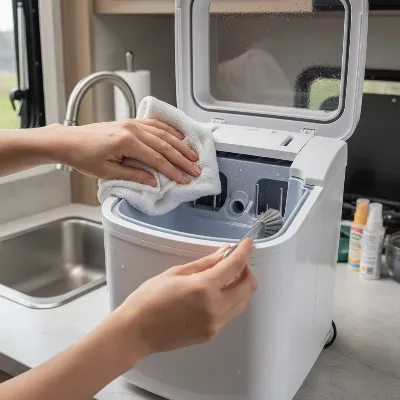 A person cleaning the interior of a small portable ice maker in an RV.
Conclusion
A small ice maker is more than just a luxury; it’s a major upgrade for RV camping trips, offering unparalleled convenience and a continuous supply of fresh ice wherever your adventures take you. By understanding the different types, carefully comparing features like capacity, ice type, power requirements, and ease of use, you can confidently select the perfect model for your rig. Prioritizing portability, efficient ice production, and a design that complements your RV’s limited space will ensure you make an informed decision. that consistent cleaning and mindful operation will keep your ice maker performing at its best for years of enjoyable travel. So, go ahead, choose your ideal companion, and look forward to countless chilled drinks under the open sky.
What is your favorite RV trip memory that was enhanced by having fresh ice readily available?
Frequently Asked Questions
How much power does a small RV ice maker use?
Most portable RV ice makers typically draw between 100 and 200 watts of electricity while actively producing ice, with a brief higher surge during startup. Due to their cycling nature, the average hourly consumption is often lower than the peak wattage, making them relatively energy-efficient for short bursts of use.
Can I run a portable ice maker on my RV’s 12V battery?
While most portable ice makers are designed for 120V AC household outlets, they can be run on a 12V RV battery system if you have a powerful enough inverter. Direct 12V DC ice makers exist but are less common as standalone units; many RVers use their 120V models via their RV’s inverter for off-grid power.
How often should I clean my RV ice maker?
It is recommended to clean your RV ice maker at least every three to six months, or more frequently if it’s used often, especially during hot weather. Regular cleaning prevents the buildup of mineral deposits, mold, and bacteria, ensuring hygienic and fresh-ttasting ice.
What kind of water should I use in my RV ice maker?
Using filtered or bottled water is highly recommended for your RV ice maker. This helps prevent the accumulation of scale and mineral deposits, which can impair the machine’s efficiency and impact the taste of your ice. High-quality water also extends the lifespan of the appliance.
Do portable ice makers keep ice frozen?
No, portable ice makers typically do not have a freezer compartment to keep ice frozen indefinitely. They produce ice and then hold it in an insulated basket where it will slowly melt. For long-term storage, you’ll need to transfer the fresh ice to your RV’s freezer or a cooler.
What is nugget ice, and why is it popular for RVs?
Nugget ice, also known as “chewable” or “sonic” ice, is soft, crunchy, and porous, making it a favorite for many beverage enthusiasts. Its popularity in RVs stems from its unique texture and the fact that it chills drinks quickly without diluting them too fast.
How to Clean Your RV Ice Maker
Regular cleaning of your RV ice maker is crucial for hygiene and longevity. Follow these steps to prevent mold and mineral buildup.
Always disconnect the power before cleaning. Locate and pull the drain plug to completely empty any water from the reservoir. This ensures safety and prepares the machine for cleaning.
Take out the ice basket and any removable scoops or trays. Wash these thoroughly in warm, soapy water to remove any residue or buildup. Rinse them well before proceeding.
Mix one part white vinegar to ten parts water, or use a food-safe detergent. Dip a soft washcloth or sponge into the solution and carefully wipe down all interior surfaces, including the water reservoir, ice-making prongs, and walls. Use a soft toothbrush for tight corners.
After wiping, rinse the interior with clean water. Then, with the drain plug in place, pour fresh cleaning solution into the reservoir and run a few ice-making cycles (without consuming the ice) to circulate the solution through internal components. Drain the solution completely afterward.
Fill the reservoir with clean, fresh water and run two to three more ice-making cycles, draining the water each time, to thoroughly rinse away any residual cleaning solution. After the final rinse and drain, wipe the interior dry with a clean, soft cloth to prevent mold before storage.
Get our weekly buyer guide
Practical specs, not advice. Unsubscribe anytime.

This was a solid read. I appreciated the breakdown of 12V DC versus 120V AC units. We mostly do off-grid camping, so I was leaning towards a 12V, but after reading about the features, I decided to stick with a 120V and just use our inverter. The rapid ice delivery in 6-15 minutes is a huge plus when we’re setting up camp.
I got one of the smaller countertop models after reading this, hoping for a continuous supply of ice. While it does make ice quickly, I found the ice capacity a bit smaller than I expected for our group. It’s fine for a couple of drinks, but for a whole cooler, I have to run it constantly. Still, it’s better than buying bags of ice.
I’ve been looking for a good ice maker for our RV trips for ages, and this guide was super helpful. We went with one of the 120V AC models mentioned, and it’s been a game-changer. The 26 lbs daily production is perfect for our family of four, and we never run out of ice, even on longer trips. It fits perfectly on our counter too.
Finally, a guide that gets it! We have a smaller RV, so physical dimensions are a huge factor for us. This helped me narrow down the options to something that actually fits without taking up too much precious counter space. The fact that it makes ice in just a few minutes means we’re always ready for happy hour.